The FIFA World Cup is football’s biggest stage, where legends are made and history is written. But alongside iconic goals and unforgettable victories, the tournament has also produced moments of controversy, drama, and chaos. Few events capture that intensity better than a red card. From emotional outbursts to questionable referee decisions, world cup red cards have often changed matches, defined careers, and sparked debates that last for decades.
In this blog, we break down the red cards that shocked fans the most, analyzing the context, impact, and legacy of each incident.
10. Diego Maradona vs Brazil (1982)
One of the earliest controversial world cup red cards involving a global icon came in 1982. With Argentina trailing Brazil, frustration took over. Maradona lashed out with a kick at João Batista, resulting in a straight red.
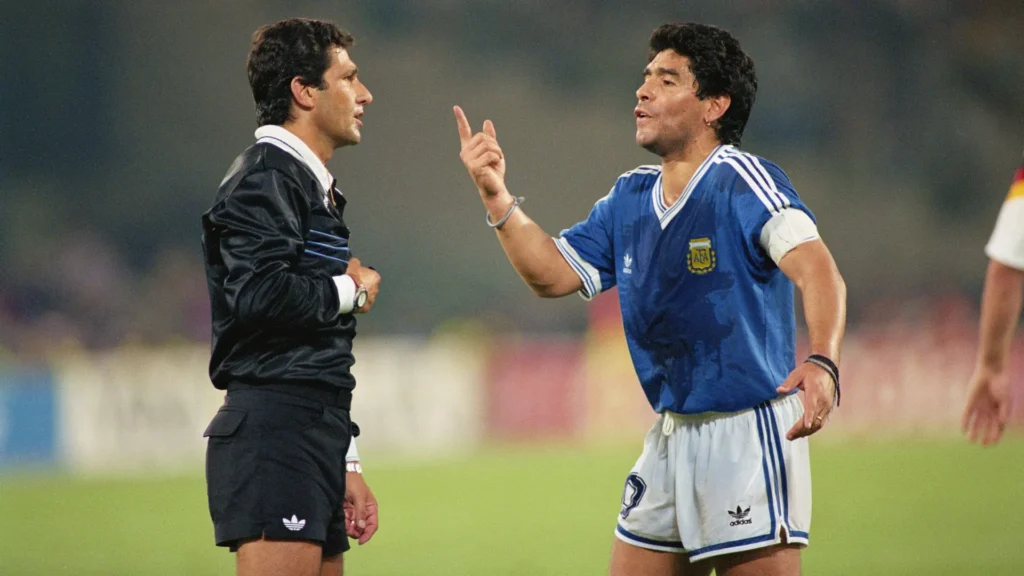
This moment highlighted how even the greatest players can lose control under pressure. Argentina’s elimination followed shortly after, and the red card became a defining early controversy in World Cup history.
9. Claudio Marchisio vs Uruguay (2014)
Marchisio’s dismissal in a crucial group-stage clash remains one of the harshest red cards. The Italian midfielder was sent off for a studs-up challenge that many believed deserved only a yellow.
The decision shifted momentum instantly. Uruguay capitalized on the numerical advantage, scoring late and eliminating Italy. This red card showed how fine margins can decide World Cup fate.
8. Thierry Henry vs Uruguay (2002)
France entered the 2002 tournament as defending champions, but their campaign collapsed dramatically. Henry’s red card in a must-win game against Uruguay was a turning point.
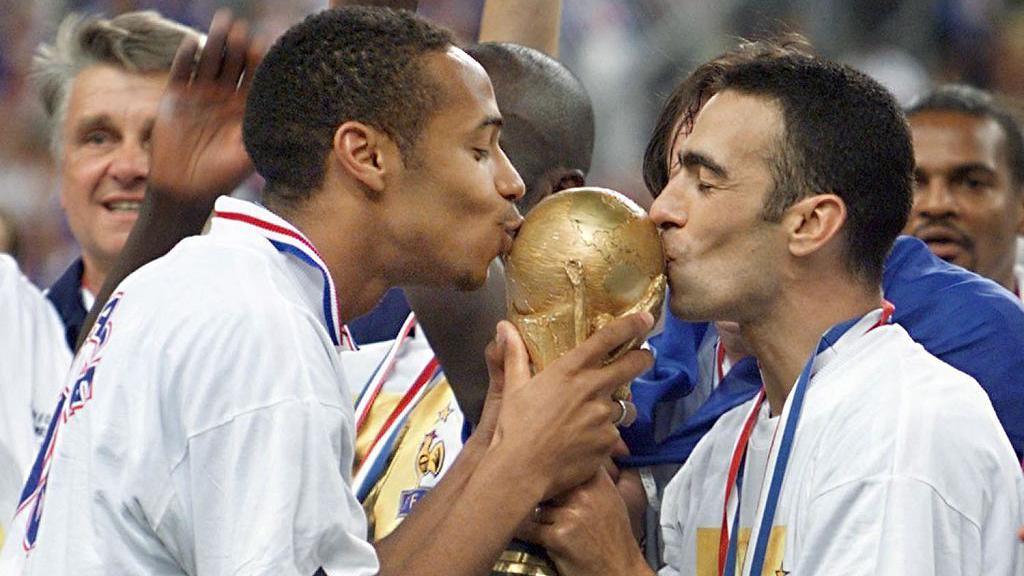
Reduced to 10 men, France failed to score and exited the tournament early. Among all world cup red cards, this one stands out for its impact on a defending champion’s downfall.
7. Josip Šimunić vs Australia (2006)
This remains one of the most bizarre moments in football history. Šimunić was shown three yellow cards before finally being sent off. A refereeing error of this magnitude is almost unheard of at the highest level.
This incident is often cited when discussing controversial world cup red cards, not because of player behavior, but due to officiating failure.
6. Wayne Rooney vs Portugal (2006)
Rooney’s red card in the quarterfinal against Portugal remains one of England’s most debated moments. He was sent off for stamping on Ricardo Carvalho, but the situation escalated due to pressure from Portuguese players, including teammate Cristiano Ronaldo.
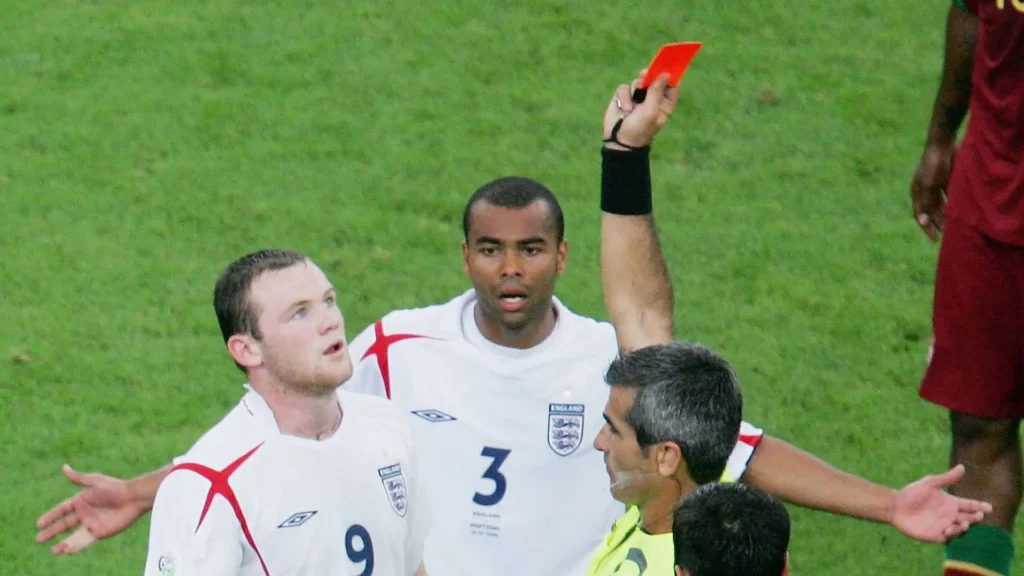
The aftermath was intense, with Rooney criticized heavily in England. This incident is a classic example of how red cards can trigger media storms and fan backlash.
5. Antonio Rattín vs England (1966)
Long before modern officiating systems, Rattín’s red card in 1966 sparked outrage. Sent off for dissent despite language barriers, he refused to leave the pitch immediately.
This controversial decision played a role in shaping future refereeing systems, including the introduction of yellow and red cards. Among historic world cup red cards, this one had a lasting impact on football rules.
4. Laurent Blanc vs Croatia (1998)
Blanc’s dismissal in the semifinal is still debated today. After a minor altercation with Slaven Bilić, the Croatian fell dramatically, convincing the referee to show a red card.
France still won the match, but Blanc missed the final. This incident highlights how world cup red cards can affect players’ legacies, even when their teams succeed.
3. Luis Suárez vs Ghana (2010)
This is arguably the most controversial and strategic red card in World Cup history. Suárez deliberately handled the ball on the goal line to prevent a last-minute winner.
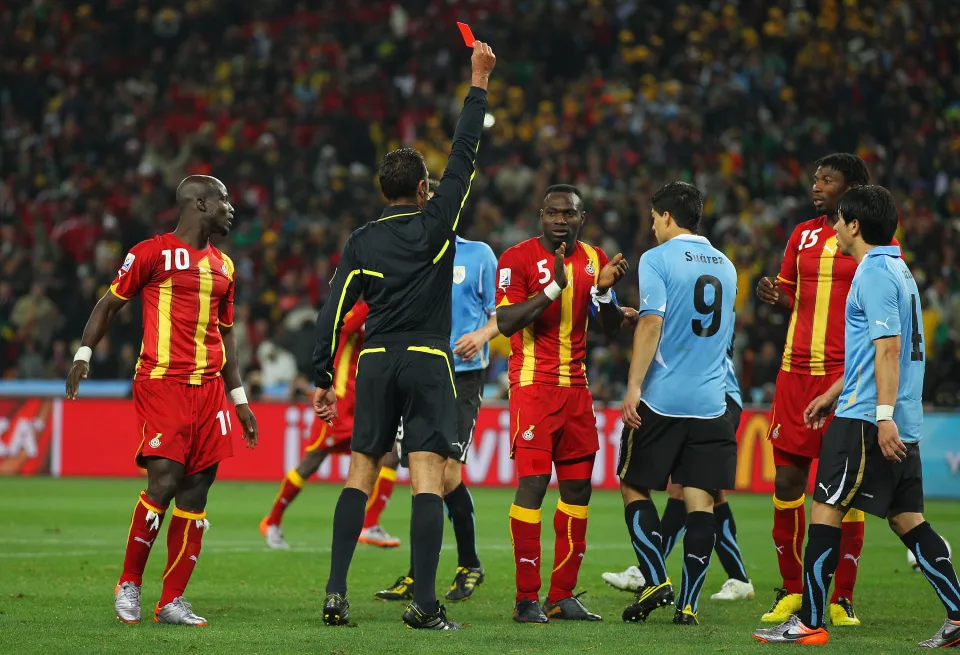
He was sent off, but Ghana missed the penalty, and Uruguay advanced. Unlike most world cup red cards, this one was both condemned and praised, sparking debates about sportsmanship versus tactics.
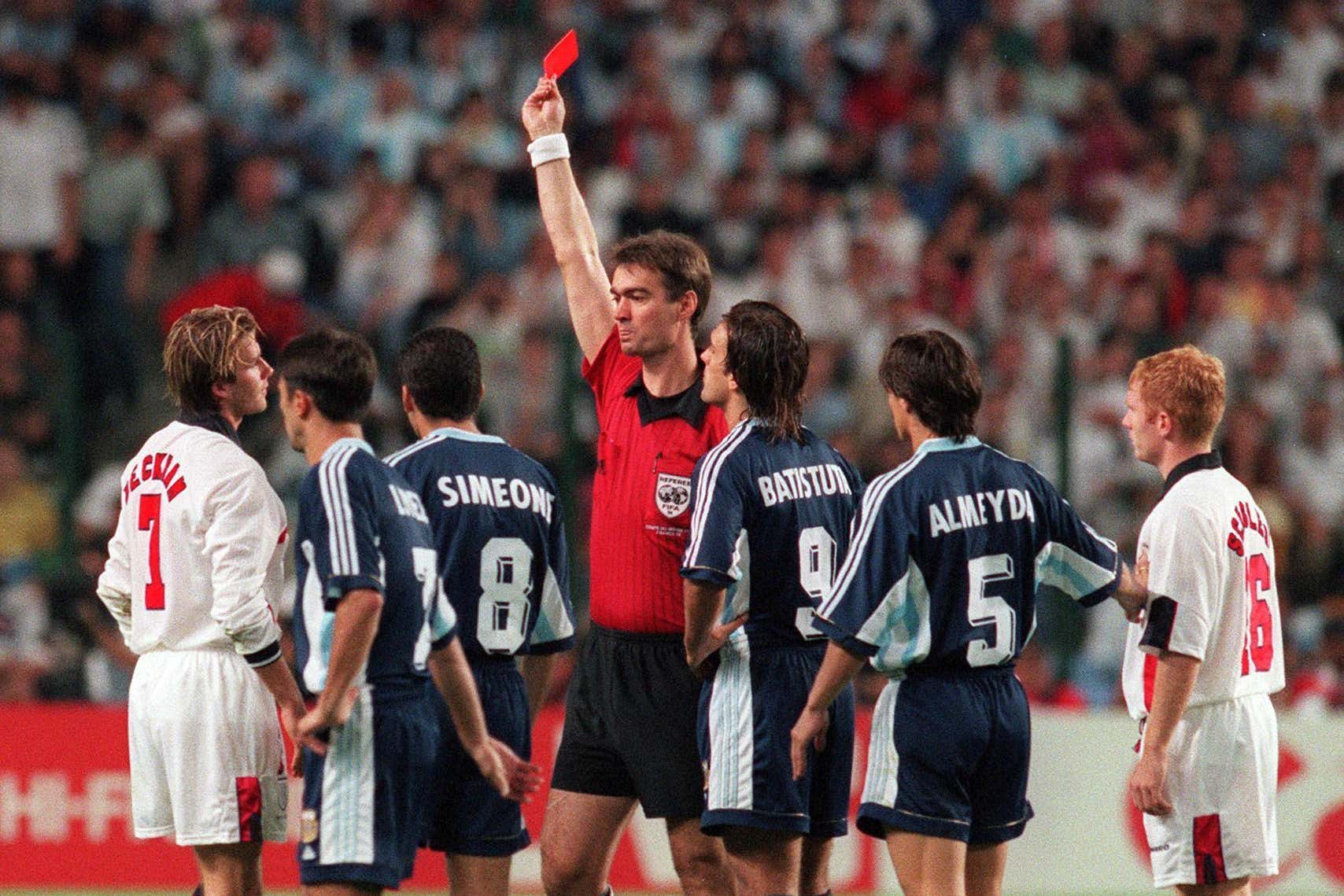
2. David Beckham vs Argentina (1998)
Beckham’s red card is one of the most infamous moments in English football. After a foul by Diego Simeone, Beckham reacted with a kick while on the ground.
England went on to lose on penalties, and Beckham faced intense criticism from fans and media. This incident shows how world cup red cards can define a player’s public image for years.
1. Zinedine Zidane vs Italy (2006 Final)
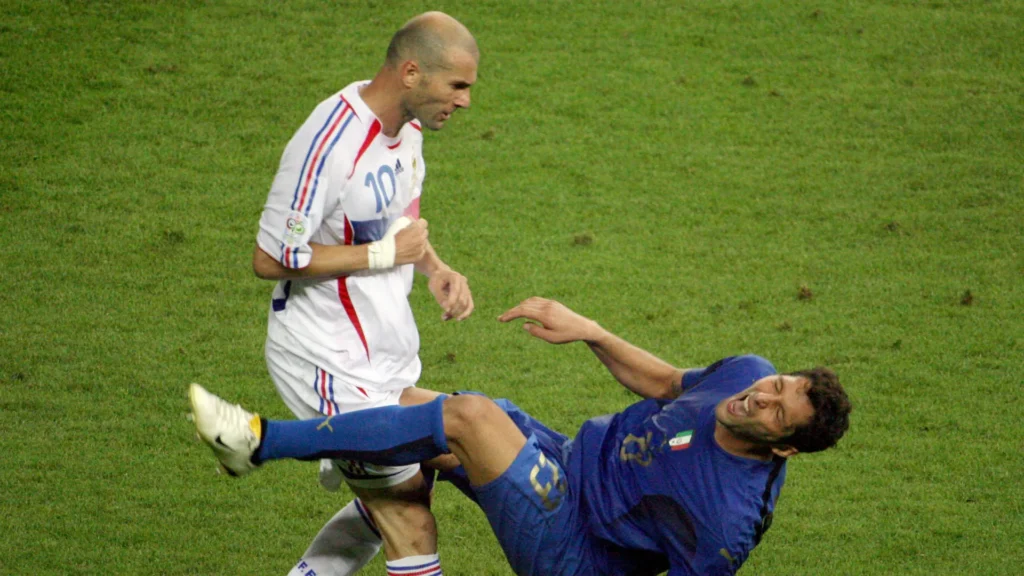
The most shocking moment in World Cup history came in the 2006 final. Zidane, playing his last professional match, headbutted Marco Materazzi after an exchange of words.
The red card not only ended Zidane’s career on a controversial note but also shifted the final’s momentum. France lost on penalties, and the incident became one of the most iconic world cup red cards ever. It demonstrated how a single moment can overshadow an entire career’s brilliance.
Why World Cup Red Cards Matter
The impact of world cup red cards goes far beyond a single match. They can change tactical dynamics, shift momentum, and alter tournament outcomes. Teams forced to play with ten men often struggle defensively and lose attacking balance.
Additionally, red cards influence player legacies. While some recover and redeem themselves, others remain defined by a single moment of indiscipline. Zidane, Beckham, and Suárez are prime examples of how these incidents become part of football folklore.
Tactical and Psychological Impact
Modern football emphasizes discipline more than ever. Coaches build systems that rely on structure, pressing, and organization. A red card disrupts all of this instantly.
From a psychological perspective, red cards often occur under extreme pressure. High stakes, national pride, and emotional intensity can lead players to make impulsive decisions. Understanding this context is key when analyzing these moments.
Evolution of Refereeing
Over the years, refereeing has evolved significantly. Technology like VAR has reduced some controversial decisions, but debates still continue. Incidents like Šimunić’s three yellow cards highlight how far officiating has come.
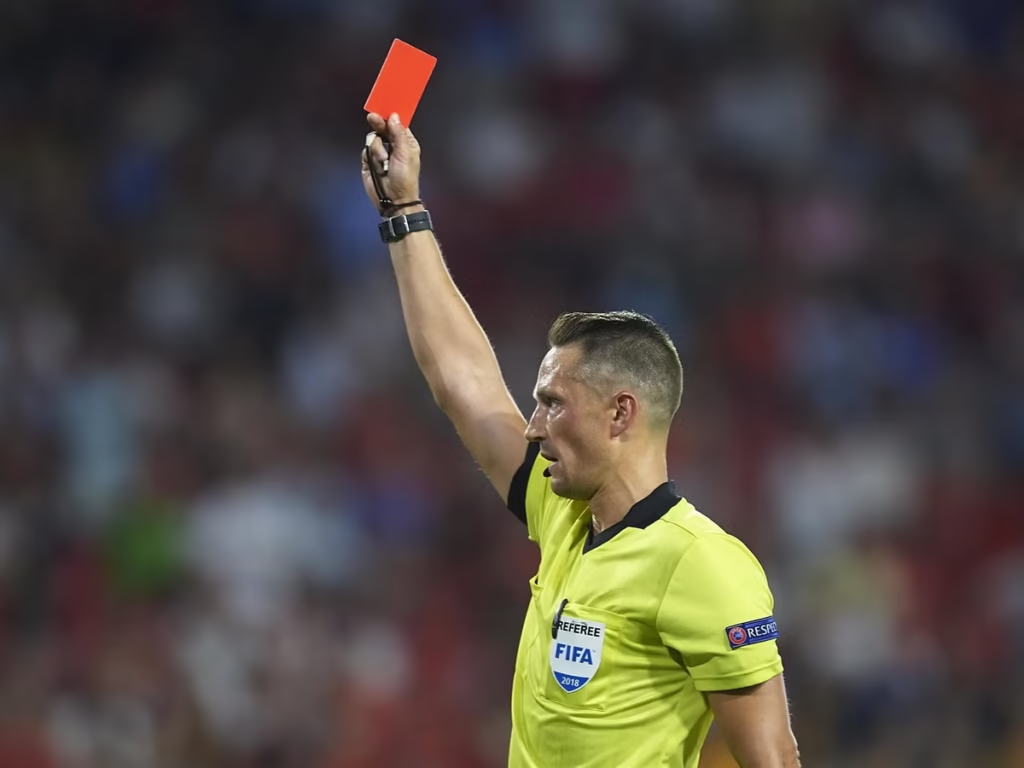
Despite improvements, world cup red cards remain a source of controversy, proving that football will always have a human element that cannot be fully controlled.
Conclusion
The history of the FIFA World Cup is incomplete without its most shocking red cards. These moments combine drama, emotion, and controversy, making them unforgettable for fans worldwide.
From Zidane’s headbutt to Suárez’s handball, world cup red cards have shaped tournaments, careers, and football history itself. They serve as reminders that even on the biggest stage, the game is unpredictable, emotional, and deeply human.
For fans, these incidents are not just controversies they are defining chapters in the story of the World Cup.