A Fresh Beginning at St James’ Park
Newcastle United’s New Era has officially begun with the appointment of Matthias Jaissle as the club’s new head coach. Following the departure of Eddie Howe, Newcastle’s hierarchy moved quickly to appoint one of Europe’s most highly rated young managers. At just 38 years old, Jaissle arrives with a growing reputation for developing players, implementing aggressive attacking football and building winning teams.
The decision marks one of the most significant moments since the club came under new ownership. While Eddie Howe played a crucial role in restoring Newcastle’s competitiveness and guiding them back into European football, the club has now decided to move in a different direction. The appointment of Jaissle signals that Newcastle remain committed to becoming regular challengers at the highest level of English and European football.
Supporters naturally have questions about what comes next. Many know Jaissle from his successful spells with Red Bull Salzburg and Saudi Pro League side Al-Ahli, but managing in the Premier League presents an entirely different challenge. Newcastle are not rebuilding from scratch, yet they are entering a period of significant transition following several high-profile departures and changes behind the scenes.
This article explores why Newcastle selected Matthias Jaissle, what he has achieved during his coaching career, the philosophy he brings to Tyneside and why this appointment could define Newcastle United’s New Era over the coming years.
Why Newcastle United Chose Matthias Jaissle
Replacing a manager as successful as Eddie Howe was never going to be straightforward. Howe transformed Newcastle from relegation candidates into Champions League participants while rebuilding the club’s culture and restoring belief throughout St James’ Park.
However, modern football rarely stands still. Newcastle’s owners have consistently spoken about creating a sustainable project capable of competing with England’s elite clubs. They wanted a coach capable of developing young talent, introducing progressive tactical ideas and leading the club through its next phase of growth.
Matthias Jaissle matched many of those requirements.
According to Newcastle’s official announcement, chief executive David Hopkinson described Jaissle as the standout candidate following an extensive recruitment process. Sporting director Ross Wilson also highlighted that Jaissle’s football philosophy closely aligned with the club’s long-term sporting vision, particularly his ability to improve players, create high-performance environments and build cohesive teams.
Rather than appointing an experienced Premier League manager, Newcastle have chosen a coach whose best years may still lie ahead. It is a decision based on long-term planning instead of short-term stability.
For Newcastle supporters, the appointment also represents confidence in the club’s future. Rather than reacting cautiously after Howe’s departure, Newcastle have continued pursuing ambitious targets capable of taking the project forward.
Matthias Jaissle’s Journey into Management
Although still relatively young, Matthias Jaissle has built an impressive coaching résumé in a short period.
His playing career was cut short due to injury after spending most of his professional years with Hoffenheim in Germany. Forced into an early retirement, he turned his attention towards coaching and quickly established himself within the Red Bull football network.
Working within Red Bull’s coaching structure exposed Jaissle to one of football’s most demanding tactical environments. Clubs across the Red Bull system prioritise pressing, intensity, athleticism and proactive football. Young coaches are encouraged to implement modern tactical principles while maintaining a strong emphasis on player development.
Jaissle initially coached within RB Leipzig’s academy before receiving his first senior opportunity with FC Liefering in Austria.
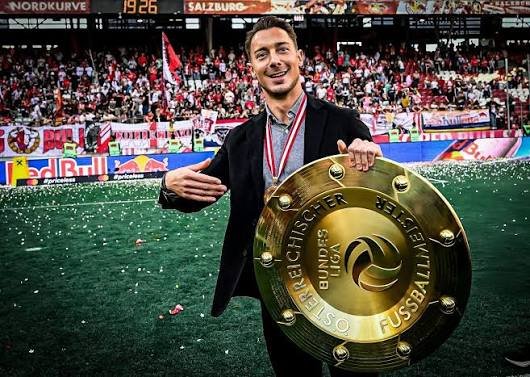
His work there quickly attracted attention.
In 2021, Red Bull Salzburg promoted him to first-team manager following Jesse Marsch’s departure. Despite his lack of senior managerial experience, Jaissle immediately impressed.
During his time at Salzburg, he won consecutive Austrian Bundesliga titles while maintaining the club’s reputation for developing elite young players. Perhaps more importantly, he guided Salzburg into the UEFA Champions League knockout stages for the first time in the club’s history.
That achievement significantly enhanced his reputation across Europe.
Managing young footballers while competing successfully against stronger opponents demonstrated tactical flexibility, leadership and an ability to maximise available resources.
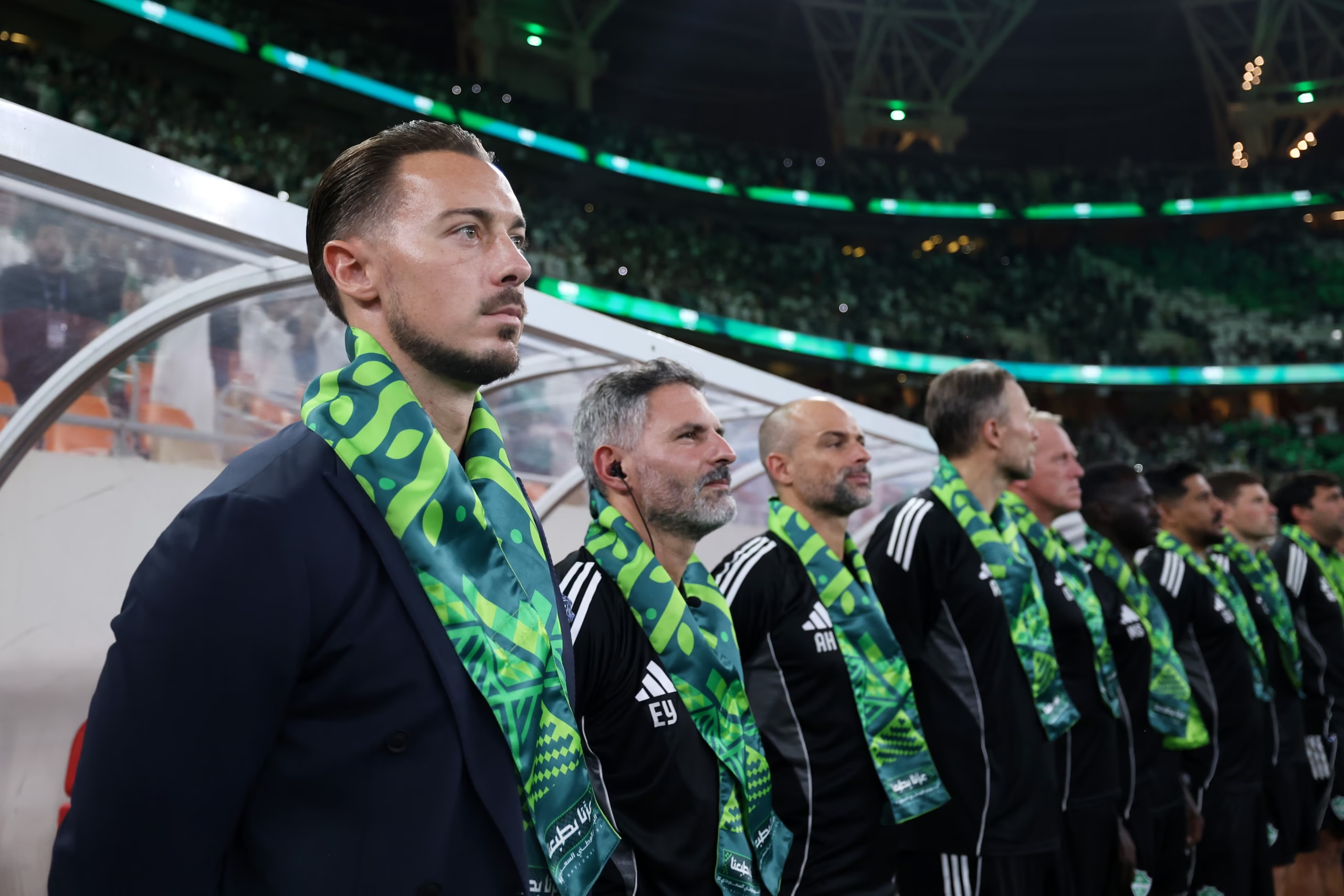
Those qualities eventually led Al-Ahli to appoint him in Saudi Arabia.
Success Continues at Al-Ahli
Many coaches moving to Saudi Arabia have been viewed primarily as experienced managers approaching the latter stages of their careers. Jaissle represented something different.
Rather than treating the move as a financial opportunity, he continued building his coaching profile by working with an ambitious club determined to compete at continental level.
Under his leadership, Al-Ahli won back-to-back AFC Champions League Elite titles while maintaining an attractive attacking style of football.
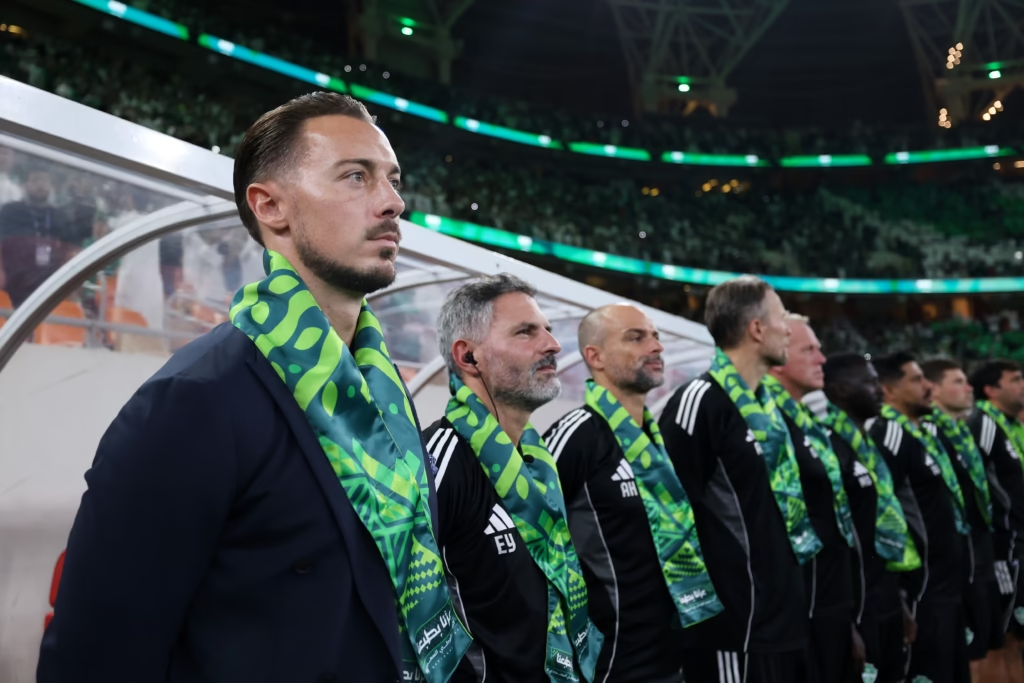
Success in Saudi Arabia also demonstrated another important quality.
Managing internationally recognised stars requires different leadership skills compared to coaching young players in Austria. High-profile footballers demand strong communication, tactical clarity and effective man-management.
Jaissle successfully balanced those responsibilities while continuing to produce winning teams.
By the time Newcastle began searching for Eddie Howe’s successor, Jaissle had already established himself as one of Europe’s most promising young coaches despite still being only 38 years old.
His career progression has been rapid, but every step has shown measurable development.
The Football Philosophy Behind Newcastle United’s New Era
One of the biggest reasons Newcastle selected Matthias Jaissle is his clearly defined football identity.
Unlike managers who constantly adapt their principles depending on opponents, Jaissle has consistently spoken about implementing an aggressive, front-foot style based on intensity and teamwork.
Speaking previously about his football philosophy, Jaissle explained that his teams are built around pressing opponents high up the pitch. He wants players to regain possession quickly before attacking with speed and purpose.
This philosophy originates largely from his experiences within the Red Bull coaching system.
However, Jaissle has never claimed to copy one particular manager.
Instead, he has openly acknowledged learning from several of football’s leading tactical minds.

Thomas Tuchel influenced his understanding of positional organisation and tactical discipline.
Ralf Rangnick helped shape his appreciation for structured pressing and collective organisation.
Jürgen Klopp inspired his approach to aggressive transitions following turnovers.
Pep Guardiola’s positional play has influenced Jaissle’s ideas regarding structure and balance while in possession.
He has also admired Roberto De Zerbi’s innovative build-up play.
Rather than attempting to imitate any one coach completely, Jaissle has blended ideas from several successful managers into his own tactical identity.
That flexibility could prove particularly valuable in the Premier League, where every opponent presents different challenges.
Flexible Systems Rather Than Fixed Formations
One misconception surrounding modern football managers is that they rely on a single formation throughout every match.
Jaissle has repeatedly explained that formations matter less than player positioning and tactical behaviour.
During his time at Salzburg, he often utilised a narrow 4-4-2 diamond designed to overload central midfield while creating aggressive pressing opportunities.
At Al-Ahli, he regularly switched to a 4-2-3-1 system that better suited the strengths of his squad.
Those changes highlight an important characteristic.
Jaissle does not appear determined to force players into one tactical blueprint regardless of circumstances. Instead, he adapts his structure while maintaining the same overall principles.

Regardless of formation, several themes consistently appear in his teams:
High pressing to force opposition mistakes. Quick attacking transitions after winning possession. Compact defensive organisation. Aggressive movement without the ball. Strong collective work ethic. Technical quality combined with physical intensity. For Newcastle supporters, those principles should sound familiar.
Eddie Howe also valued pressing and attacking football, meaning Jaissle’s philosophy may allow several current players to adapt relatively quickly despite the managerial change. At the same time, Newcastle’s tactical approach is expected to evolve as Jaissle introduces his own ideas during pre-season and throughout the Premier League campaign.
The coming months will reveal how effectively those methods translate to one of the most competitive leagues in world football.
The Biggest Challenges Facing Matthias Jaissle
Although Newcastle United’s New Era begins with plenty of optimism, Matthias Jaissle faces one of the toughest jobs in English football. Supporters expect the club to challenge for European qualification again, but several significant changes have left the squad in transition.
The biggest challenge is rebuilding momentum after the departure of Eddie Howe. The former manager spent almost five years creating a strong culture within the dressing room. He helped transform Newcastle from a club fighting relegation into one capable of competing against England’s elite. Replacing that leadership is never easy, regardless of a new manager’s reputation.
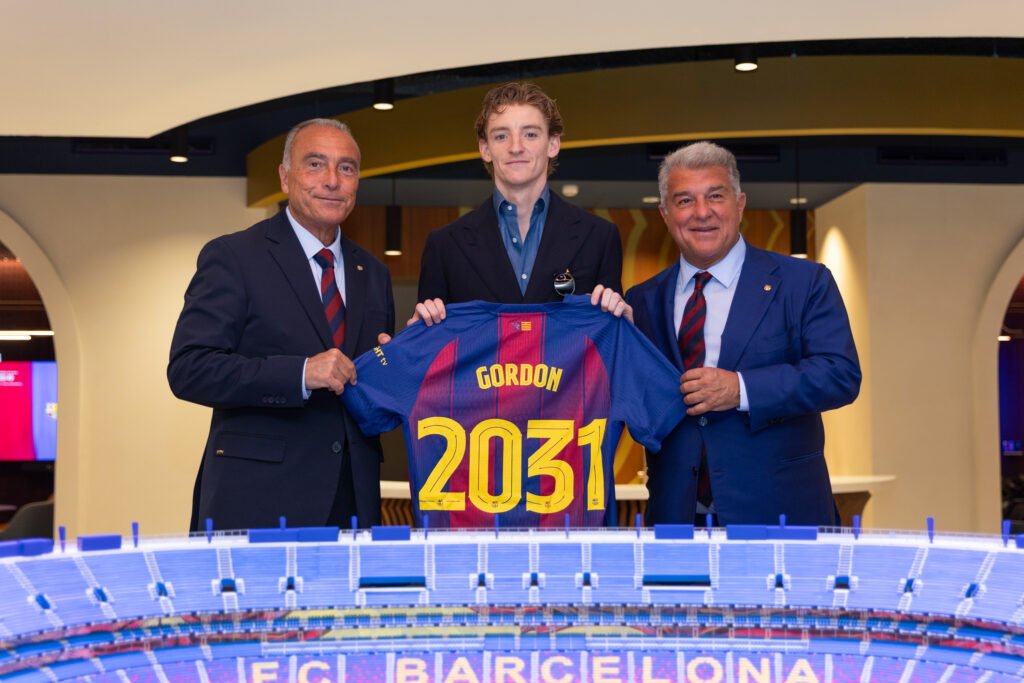
Jaissle also inherits a squad that has undergone major changes during the summer transfer window. Newcastle have already lost several important players, including Sandro Tonali and Anthony Gordon, while Bruno Guimarães has also been strongly linked with a move away. Losing experienced leaders and influential performers naturally creates uncertainty, particularly before the start of a new Premier League campaign.
Beyond transfers, Jaissle must quickly adapt to the demands of English football. The Premier League is widely regarded as the most competitive domestic league in the world. Every week presents a difficult challenge, and managers receive very little time to implement new ideas.
Unlike Austria or Saudi Arabia, where certain clubs dominate their respective leagues, the Premier League offers few straightforward matches. Tactical preparation, squad rotation and in-game management become even more important across a demanding 38-match season.
Fortunately for Newcastle supporters, Jaissle appears fully aware of the task ahead. In his first interview as head coach, he described the club as one with enormous ambition, a clear vision and exceptional potential. He also stressed that he believes there is significant quality already within the squad and committed himself fully to helping Newcastle achieve their objectives.
Those comments will encourage supporters looking for stability during a period of significant change.
Can Jaissle Improve Newcastle’s Current Squad?
One of Matthias Jaissle’s strongest qualities throughout his coaching career has been player development.
At Red Bull Salzburg, he worked with numerous young footballers who later moved to some of Europe’s biggest clubs. His coaching focused not only on improving tactical understanding but also on helping players develop confidence within an attacking system. That ability could prove invaluable at Newcastle.
Several members of the current squad remain young enough to improve significantly over the coming seasons. Players such as Lewis Hall, Tino Livramento and Anthony Elanga possess the athletic qualities required for Jaissle’s high-intensity football. His coaching methods could help them become even more influential in the Premier League.
Midfield will also play a crucial role in his tactical approach. Jaissle’s systems demand intelligent positioning, constant movement and aggressive pressing. Newcastle’s central midfielders will need exceptional fitness levels and strong technical ability to control matches both with and without possession. Defensively, Newcastle may also become more proactive.

Rather than defending deep for extended periods, Jaissle generally prefers his teams to win possession as high up the pitch as possible. This approach reduces pressure on defenders while creating immediate attacking opportunities closer to the opposition’s goal. However, implementing such an aggressive style requires time.
Players must understand pressing triggers, positional responsibilities and collective movement. Success depends on the entire team working together rather than relying on individual quality.
If Newcastle embrace those principles successfully, supporters could witness one of the Premier League’s most energetic teams over the coming years.
Expectations for the 2026/27 Season
Expectations surrounding Newcastle United’s New Era are naturally high, but patience will remain essential. Changing managers always brings an adjustment period. New tactical ideas require time to become second nature, while new signings must settle into unfamiliar surroundings.
Newcastle’s immediate objective will likely be securing another European qualification place.
A return to the UEFA Champions League would represent an outstanding achievement considering the competition throughout the Premier League. Clubs such as Manchester City, Arsenal, Liverpool, Chelsea, Manchester United, Tottenham Hotspur and Aston Villa all possess squads capable of challenging near the top of the table. Consistency will therefore become Newcastle’s biggest priority.
If Jaissle can establish a clear playing identity early in the season while maintaining positive results, confidence throughout the club should grow rapidly.

The opening fixtures may prove particularly important. Newcastle’s supporters have always created one of English football’s best home atmospheres, and positive early performances could quickly build excitement around the new project. Equally important will be performances against direct rivals.
Supporters understand that rebuilding takes time, but they also want to see visible progress. Aggressive football, tactical organisation and clear attacking ideas will likely earn patience, even if results occasionally fluctuate during the early months.
Why Newcastle’s Long-Term Vision Makes Sense
Perhaps the most encouraging aspect of Jaissle’s appointment is that it fits Newcastle’s wider strategy. Rather than chasing short-term success through constant managerial changes, the club appears committed to building a sustainable football structure.
Modern elite clubs increasingly focus on long-term planning instead of immediate solutions. Managers now work alongside sporting directors, recruitment departments and performance analysts to create a consistent football identity throughout the club.
Jaissle’s appointment reflects that philosophy.His experience developing young players aligns well with Newcastle’s recruitment strategy. The club has increasingly invested in footballers with long-term potential instead of relying solely on established stars. This approach offers several advantages. Young players often improve significantly under high-quality coaching.

Successful development increases squad depth while reducing the need for expensive transfers. A consistent tactical identity allows recruitment decisions to become more efficient because players are signed specifically to suit the manager’s football philosophy.
If Newcastle maintain that structure over several years, they could establish themselves among the Premier League’s strongest clubs. The project extends beyond one season.
Instead, the club appears focused on building foundations capable of delivering sustained success both domestically and in European competition.
What Success Would Look Like
Success during Jaissle’s first season should not be measured exclusively by league position. Supporters will naturally want Newcastle competing near the European places, but progress can also be judged through performances, tactical identity and player development.
If Newcastle become one of the Premier League’s most organised pressing teams while continuing to improve younger players, the club will have taken meaningful steps forward. Supporters also want to see exciting football.
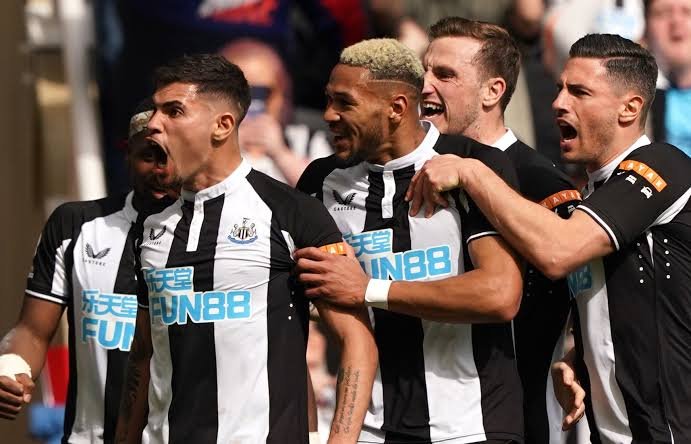
Jaissle has consistently spoken about intensity, togetherness and attacking ambition throughout his coaching career. Those values closely match the atmosphere supporters expect at St James’ Park, where aggressive football has traditionally been embraced.
Creating that connection between players and supporters could become one of his greatest achievements.
Should Newcastle establish themselves as a team capable of competing confidently against England’s biggest clubs while continuing to develop future stars, Newcastle United’s New Era will already be heading in the right direction.
Conclusion
Newcastle United’s New Era represents one of the most fascinating managerial appointments in recent Premier League history. Matthias Jaissle arrives on Tyneside with an impressive coaching record, a clearly defined football philosophy and a reputation for improving players and building successful teams.
His achievements with Red Bull Salzburg and Al-Ahli demonstrate that he understands how to create winning environments while maintaining an attractive style of football. However, the Premier League presents an entirely new challenge. Newcastle are entering a period of transition following significant changes both on and off the pitch, and supporters know success will require patience as well as ambition.
Even so, there are genuine reasons for optimism. Jaissle’s commitment to high-intensity football, tactical flexibility and player development closely aligns with Newcastle’s long-term vision. His willingness to adapt formations without compromising his core principles suggests he possesses the flexibility needed to compete in one of football’s toughest leagues.
Only time will determine whether Matthias Jaissle can guide Newcastle back into the Premier League’s top four and establish the club as a consistent force in European football. What is already clear, however, is that Newcastle United’s New Era has begun with bold ambition, fresh ideas and a manager determined to write the next successful chapter in the club’s history.