
The FIFA World Cup Host selection has always played a crucial role in shaping football history. Since the inaugural tournament in 1930, hosting the World Cup has been more than just organizing matches it has been about national pride, global visibility, infrastructure development, and unforgettable football moments. From the early days of long sea voyages to today’s multi-nation hosting models, the journey of the FIFA World Cup host nations reflects how the game has evolved across continents.
This blog provides a complete, chronological overview of every FIFA World Cup host from 1930 to 2030, highlighting how each tournament contributed to football’s global legacy.
The Early Era: Establishing the FIFA World Cup (1930–1938)

The first FIFA World Cup was Uruguay in 1930, chosen to celebrate the country’s centenary of independence. Uruguay not only organized the tournament successfully but also won it, setting a historic precedent. Hosting in South America, however, limited European participation due to travel challenges.
Europe followed with Italy (1934) and France (1938) as hosts. Italy famously won the tournament on home soil in 1934, while France’s hosting in 1938 sparked controversy due to a lack of continental rotation, leading to South American boycotts. These early tournaments highlighted the growing importance and political sensitivity of World Cup hosting decisions.
Post-War Expansion and Global Reach (1950–1970)
After World War II halted the tournaments of 1942 and 1946, football returned with Brazil hosting in 1950. The iconic Maracanã Stadium symbolized football’s revival, despite Brazil’s heartbreaking final loss.
The 1954 FIFA World Cup host, Switzerland, introduced innovations like live television broadcasts. Sweden (1958) showcased Pelé to the world, while Chile (1962) demonstrated resilience by hosting successfully despite devastating earthquakes.
England (1966) hosted a landmark tournament, winning their first and only World Cup at Wembley. By Mexico 1970, the tournament had fully entered the modern era, featuring color television broadcasts and arguably the greatest World Cup ever played.
Football, Politics, and Passion (1974–1986)
During this era, the FIFA World Cup host role became deeply intertwined with politics and global narratives. West Germany (1974) delivered efficiency and excellence, winning at home. Argentina (1978) hosted amid political turmoil yet produced iconic football moments.
Spain (1982) expanded the tournament format, while Mexico (1986) stepped in after Colombia withdrew, becoming the first country to host twice. The 1986 World Cup is forever remembered for Diego Maradona’s brilliance.
New Markets and Globalization (1990–2006)
The World Cup continued expanding its reach with Italy (1990), followed by the United States (1994), which transformed football’s popularity in North America. Despite skepticism, the USA delivered record attendances.
France (1998) introduced the 32-team format and won as hosts, while Japan and South Korea (2002) made history as the first co-hosts. Germany (2006) then set new standards for organization, fan experience, and global engagement.
Breaking New Ground (2010–2022)

The 2010 FIFA World Cup host, South Africa, marked the tournament’s first appearance in Africa, becoming a cultural milestone despite on-field challenges for the host nation.
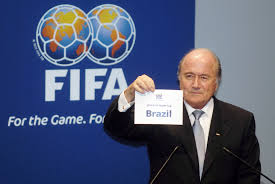
Brazil (2014) brought the World Cup back to its spiritual home, delivering drama and unforgettable moments. Russia (2018) surprised many with an efficient and festive tournament, while Qatar (2022) made history as the first Middle Eastern host and the first World Cup held in winter.
The Future of FIFA World Cup Hosting (2026–2030)
The future of the FIFA World Cup host concept embraces scale and collaboration. Canada, Mexico, and the United States (2026) will co-host the first 48-team World Cup and the first hosted by three nations.
Looking further ahead, Spain, Portugal, and Morocco (2030) will host the centenary World Cup, with celebratory matches in Uruguay, Argentina, and Paraguay, honoring the tournament’s origins. This multi-continental hosting model symbolizes football’s truly global identity.
Why Being a FIFA World Cup Host Matters
Hosting the World Cup delivers long-term benefits: improved infrastructure, tourism growth, international recognition, and football development. At the same time, it brings challenges such as financial risk, political scrutiny, and sustainability concerns.
From Uruguay in 1930 to the ambitious multi-nation hosts of 2030, the evolution of the FIFA World Cup host reflects football’s journey from a regional competition to the world’s biggest sporting event.
Conclusion
The history of the FIFA World Cup Host is a story of ambition, innovation, controversy, and unity. Each host nation has added its own chapter to football history, shaping how the world experiences the beautiful game. As the tournament moves toward larger formats and shared hosting, one thing remains certain: hosting the FIFA World Cup will always be one of the greatest honors in global sport.