
The Switzerland vs Canada World Cup 2026 Group B fixture at BC Place in Vancouver is one of the most strategically significant matches of the group stage, not only because both teams enter the game level on points, but also because the result directly shapes the knockout-stage pathway in terms of opponents, momentum, and bracket positioning.
Both Switzerland and Canada arrive unbeaten, both have already demonstrated different but effective footballing identities, and both have shown enough consistency across two matches to suggest that neither side is likely to collapse under pressure. This creates a scenario where tactical discipline, game management, and efficiency in key moments become more important than dominance in possession or attacking volume.
From a betting perspective, this match is defined by balance. The odds across global sportsbooks reflect near parity, and the statistical models across prediction platforms consistently converge toward a narrow outcome margin, often highlighting a draw or a one-goal swing in either direction rather than a clear winner. Switzerland vs Canada is an important match as it will decide who will lead the group.
Match Context and Group B Situation
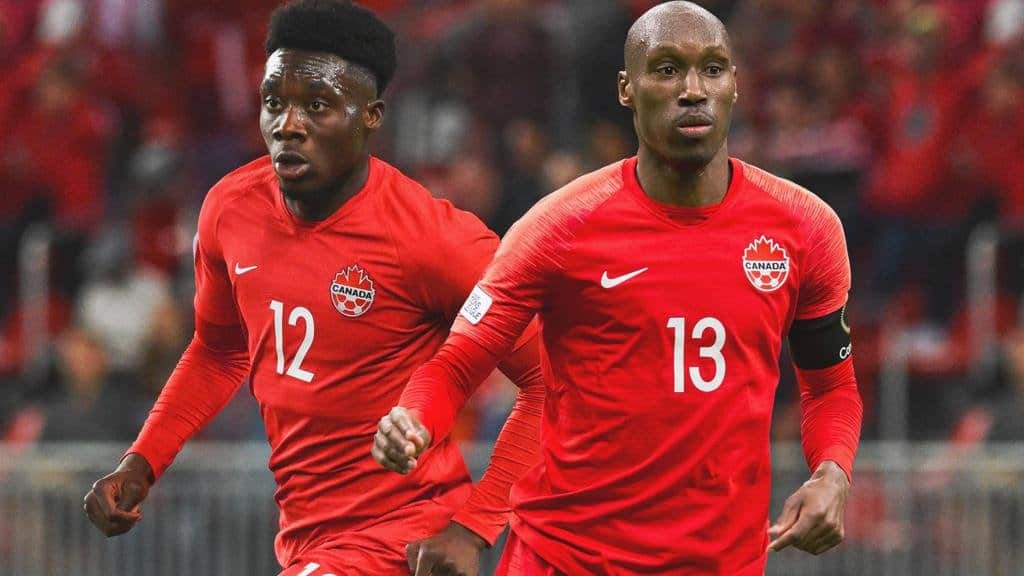
Group B has developed into a tightly controlled two-team race at the top, with Switzerland and Canada both collecting four points from their opening two matches. The remaining teams in the group are mathematically behind, which means qualification is already likely for both sides, but seeding remains the key objective.
Current standings scenario:
Canada – 4 points, goal difference +6
Switzerland – 4 points, goal difference +3
Bosnia-Herzegovina – 1 point
Qatar – 1 point
Canada’s superior goal difference is heavily influenced by their 6-0 victory over Qatar, which significantly inflated their attacking statistics and placed them marginally ahead in group positioning. Switzerland, on the other hand, have achieved similar results in terms of points but through a more controlled and less volatile match structure.
The importance of finishing top of the group cannot be overstated, as it determines the knockout bracket path, potentially avoiding stronger opposition in the Round of 32.
Switzerland vs Canada Tactical Identity Breakdown
Switzerland Tactical Structure and Game Philosophy
Switzerland approach international tournaments with a clear emphasis on structural stability, positional discipline, and controlled game phases. Under Murat Yakin, the team has consistently operated within structured formations such as 4-3-3 or 4-2-3-1 systems that prioritize compactness between the lines and controlled progression rather than high-risk attacking overloads.
The midfield triangle anchored by Granit Xhaka is the central control mechanism of the team. Xhaka’s role is not just distributional but also strategic, as he dictates tempo, switches play under pressure, and ensures Switzerland remain stable even when under sustained opposition pressure. Alongside him, Remo Freuler provides defensive coverage and positional balance, ensuring that Switzerland rarely lose structure during transitions.

In attacking phases, Switzerland rely heavily on:
- Wide overloads created through disciplined full-back movement
- Controlled build-up rather than direct vertical rushing
- Set-piece efficiency, especially in tight matches
- Structured pressing triggers rather than constant high press
One of Switzerland’s defining characteristics is their ability to reduce match chaos. Even when trailing or under pressure, they rarely abandon their structure, which makes them extremely difficult to break down over 90 minutes.
Canada Tactical Structure and Game Philosophy
Canada present a fundamentally different tactical profile. Under Jesse Marsch, the team is built around intensity, vertical transitions, and rapid attacking movement. Their system often shifts between 4-4-2 and 4-2-2-2 shapes, depending on opposition structure and match state.
The most dangerous aspect of Canada’s system is their transition phase. Once possession is won, the ball is moved forward quickly into attacking zones, where players like Jonathan David and Cyle Larin exploit space behind defensive lines. This direct approach allows Canada to generate high-quality chances even without prolonged possession dominance.
Key tactical strengths include:
- Rapid counterattacking through central channels
- Wide pace exploitation through Tajon Buchanan and Alphonso Davies
- Direct forward passing into attacking thirds
- Aggressive pressing in short bursts rather than sustained pressure

However, Canada’s midfield structure has been weakened due to the injury to Ismaël Koné, which reduces their ability to maintain control in central areas. This increases reliance on transition efficiency rather than sustained buildup play.
Against Switzerland’s compact defensive system, Canada’s effectiveness will depend heavily on whether they can create space behind the defensive line early in the match.
Recent Form and Performance Trends
Switzerland Form Trend Analysis
Switzerland’s recent competitive record demonstrates consistency rather than volatility, with results reflecting a controlled and disciplined approach to international matches.
Recent results include:
- Switzerland 4-1 Bosnia-Herzegovina
- Qatar 1-1 Switzerland
- Kosovo 1-1 Switzerland
- Switzerland 4-1 Sweden
- Slovenia 0-0 Switzerland
Across these matches, Switzerland have conceded very few goals while maintaining steady attacking output. The team rarely produces high-scoring matches unless the opposition opens up significantly, which is not expected against Canada. A key observation is that Switzerland often improve their attacking output in the second half of matches, especially after tactical adjustments from the bench.
Canada Form Trend Analysis
Canada’s form profile is more aggressive and variable, with higher goal output but also greater dependency on game state.
Recent results include:
- Canada 6-0 Qatar
- Canada 1-1 Bosnia-Herzegovina
- Canada 2-0 El Salvador
- Canada 1-1 Guatemala
- Canada 6-0 Honduras
The standout result remains the Qatar match, where Canada displayed clinical finishing and transition dominance. However, in matches against structured defensive teams, Canada’s scoring rate becomes significantly less predictable. This suggests that Canada’s attacking output is highly opponent-dependent rather than system-stable.
Head-to-Head Context
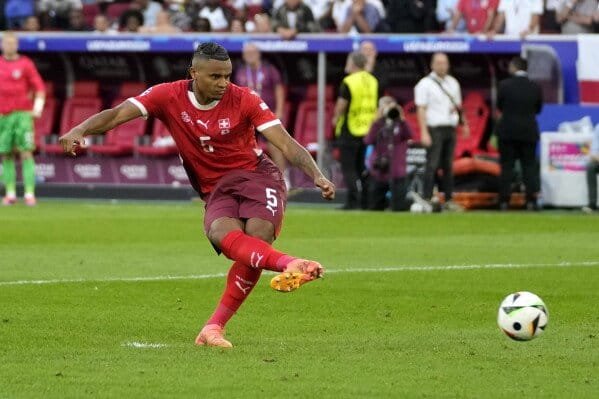
Historically, Switzerland and Canada have very limited competitive history, with their only notable meeting being a friendly match in 2002, which Canada won 3-1. However, given the time gap and complete evolution of both squads, this historical result has no tactical relevance to the current fixture.
Switzerland vs Canada Betting Odds Analysis
Across major sportsbooks, the pricing structure reflects near-perfect balance:
Switzerland win: +145 to +150 (approximately 40% implied probability)
Draw: +200 to +215 (approximately 31–33%)
Canada win: +225 to +230 (approximately 30–31%)
This indicates that while Switzerland are slight favorites due to tactical structure and tournament experience, Canada are extremely close in market valuation due to home advantage and attacking momentum.
Goals Market Analysis
Over 2.5 goals: +110 to +114
Under 2.5 goals: -135 to -143
Both Teams To Score (Yes): ~1.75–1.85
Market interpretation suggests moderate scoring expectation but not a high-scoring open game scenario. The BTTS market is particularly strong due to both teams consistently scoring in group-stage matches.
Statistical Comparison Overview
Switzerland:
- Strong defensive structure
- Low goals conceded per match
- Moderate possession dominance
- Controlled shot volume
Canada:

- Higher attacking output
- More shots per match
- Faster transitions
- Slightly weaker midfield control
Overall, Switzerland are structurally superior in defensive organization, while Canada are superior in transition speed and attacking volatility.
Match Flow Prediction
The expected match rhythm is likely to be highly structured in the first half, with Switzerland controlling possession and Canada waiting for counterattacking opportunities. As the match progresses, the tempo may increase depending on the first goal.
If Switzerland score first, the match will likely slow down significantly, with Canada forced to break down a compact defensive block. If Canada score first, Switzerland will be forced to increase attacking risk, opening space for counterattacks. This dynamic creates a high probability of late-match tactical shifts rather than early open play.
Best Betting Predictions
Both Teams To Score (BTTS – Yes)
Strong statistical alignment with both teams scoring regularly across recent fixtures.
Over 2.5 Goals
Supported by Canada’s attacking volatility and Switzerland’s ability to score once defensive structure breaks.
Draw Result (Value Selection)
Strong alignment with tactical balance, group incentives, and statistical modeling.
Under 3.5 Goals (Safer Market Option)
Protects against a controlled, tactical match scenario.
Correct Score Prediction
The most statistically supported outcome remains:
Switzerland 1-1 Canada
This scoreline reflects:
- Balanced attacking output
- Strong defensive organization on both sides
- Group-stage tactical caution
- High probability of shared possession phases without dominance
Secondary score possibilities include 2-1 either direction, depending on set pieces or transition efficiency.
Final Analytical Summary
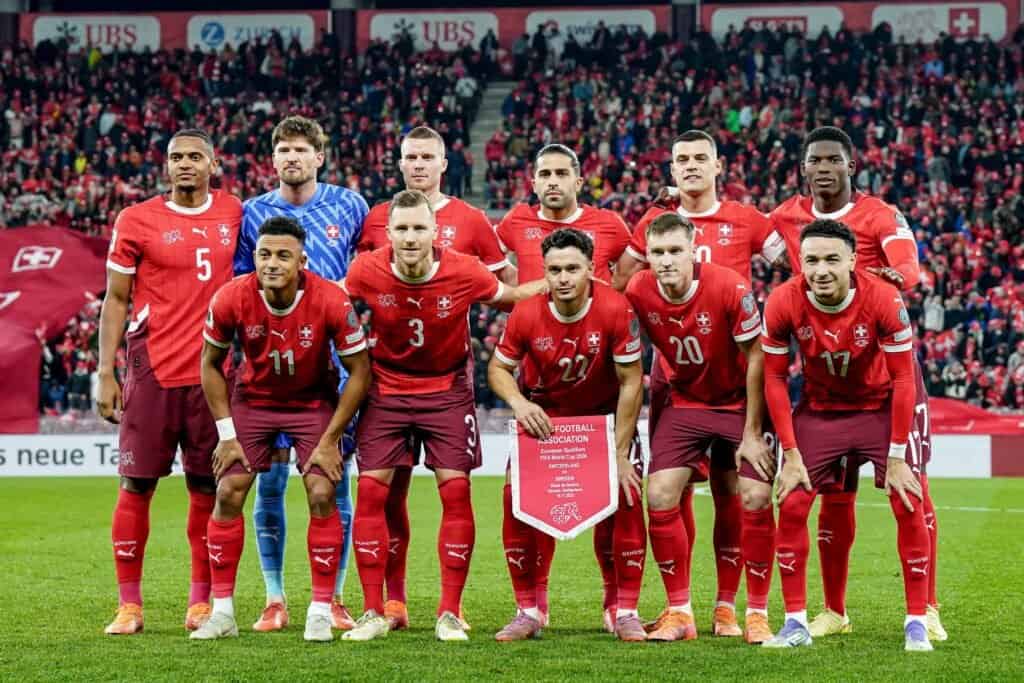
Switzerland vs Canada represents a rare equilibrium fixture where neither tactical identity fully dominates the other. Switzerland bring structural discipline, defensive control, and tournament experience, while Canada bring pace, intensity, and attacking unpredictability. From a betting standpoint, this is not a match where a clear winner is easily identified, but rather a match where value exists in goals markets and draw scenarios.
Final projection:
BTTS Yes
Over 2.5 goals lean
Correct score 1-1
Match outcome highly balanced with marginal edges only
This is expected to be a controlled, tactical, and tightly contested World Cup fixture decided by small moments rather than sustained dominance.