The 2026 FIFA World Cup will be played across the United States, Mexico, and Canada under one of the most physically demanding climate conditions in modern tournament history. While tactical systems, squad depth, and individual brilliance remain central to success, environmental stress is expected to become a defining competitive factor. Scientific projections indicate that around 25% of matches may take place under dangerous heat and humidity levels, where performance is limited not by skill, but by human physiology. This blog explores the Heat Struggle Teams Analysis of the World Cup Weather Impact 2026.
This Heat Struggle Teams Analysis: World Cup Weather Impact explores how extreme weather will influence match intensity, identifies teams most vulnerable to heat stress, and explains how climate adaptation may determine progression in the tournament.
Climate Pressure and the Hidden Match Variable
Football performance at elite level is tightly linked to physical output. However, heat and humidity introduce a constraint that cannot be solved through tactics alone. Studies using Wet Bulb Globe Temperature (WBGT), which measures combined heat stress from temperature, humidity, wind speed, and solar radiation, show that many host cities will frequently approach or exceed thresholds associated with severe physiological strain.
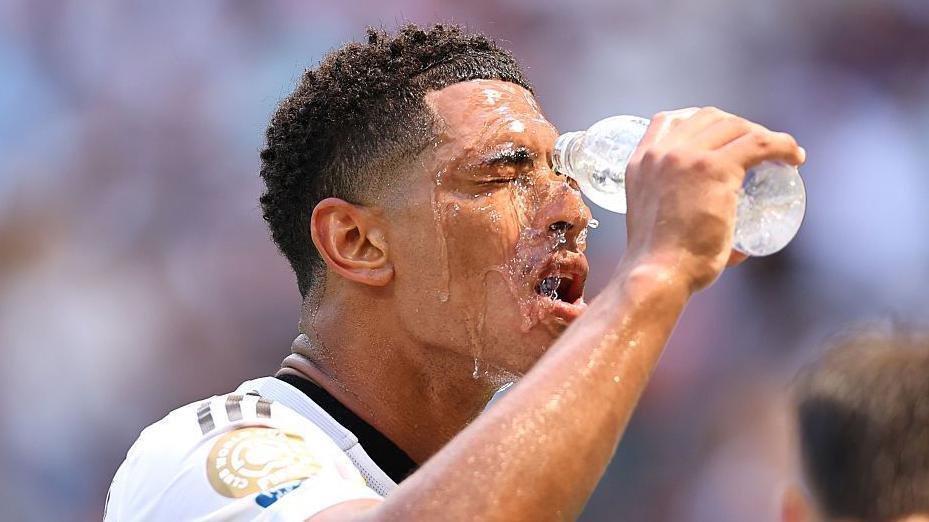
At these levels, the human body struggles to regulate core temperature efficiently. Sweat becomes less effective in humid environments, leading to faster dehydration, elevated heart rates, and reduced aerobic capacity. This creates a cascading effect on football performance, especially in matches played during afternoon kickoff windows. The result is a version of football that is slower in tempo, more fragmented in structure, and heavily dependent on energy management rather than sustained intensity.
High-Risk Teams in Heat Struggle Conditions
High-Intensity Pressing Systems Under Stress
Teams built around high pressing, rapid transitions, and aggressive counter-pressing are among the most exposed to extreme heat conditions. These systems depend on repeated high-intensity sprints, fast recovery cycles, and coordinated movement across all three lines of the pitch. In hot environments, this model begins to break down as early as the second half. Players are unable to maintain pressing triggers at consistent intervals, leading to gaps between midfield and defense. Opponents gain more time in possession, reducing the effectiveness of structured pressing systems.

The decline is not tactical in origin but physical. As muscle fatigue increases and glycogen stores deplete faster in heat, pressing intensity naturally drops. This creates a mismatch between tactical intent and physical capability, forcing teams to shift into deeper defensive shapes earlier than planned. European teams that rely heavily on structured pressing patterns are particularly vulnerable when exposed to high humidity venues, where recovery between sprints is significantly slower.
Cold-Climate National Teams and Adaptation Deficit
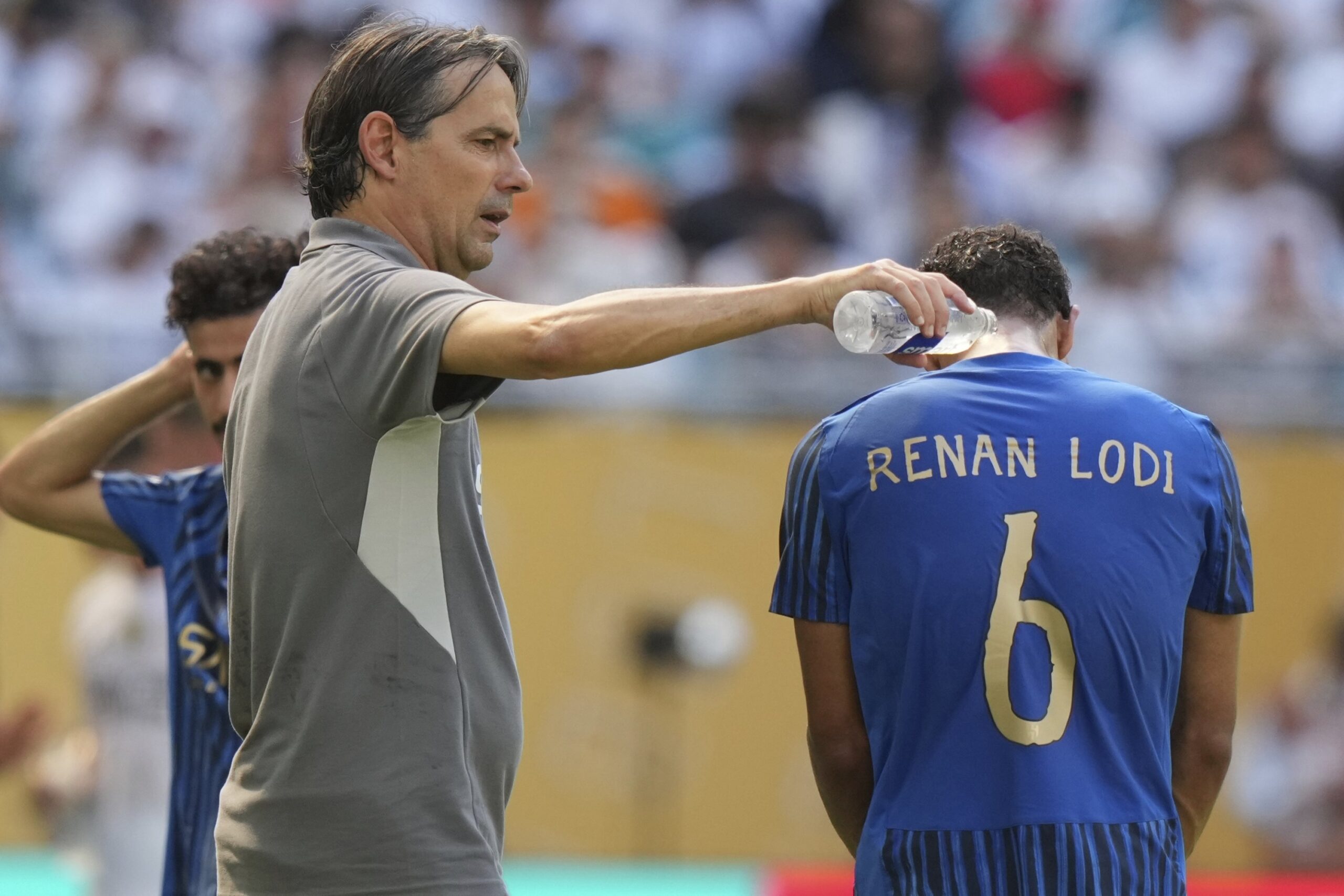
Teams whose players primarily develop in cooler climates face a different but equally significant challenge. Without regular exposure to heat stress during domestic competition, their bodies are less efficient at thermoregulation. The most common issues include early onset fatigue, reduced plasma volume efficiency, and increased risk of cramping in later stages of matches. These effects are magnified in tournaments where recovery time between matches is limited. Therefore, players might suffer from heat. Heat Struggle Teams Analysis should be done from each team.
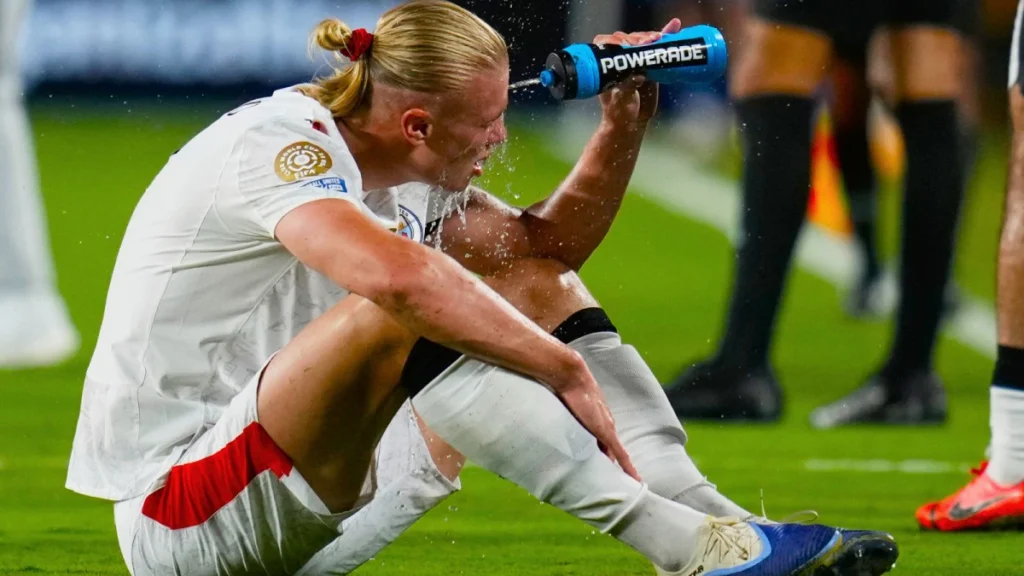
Another major disadvantage is tactical execution under fatigue. When cognitive function declines due to thermal strain, decision-making speed slows, leading to misplaced passes, poor defensive positioning, and delayed pressing reactions. Even technically strong squads can suffer significant performance drops if they fail to implement structured heat acclimation programs before the tournament.
Moderate-Risk Teams With Tactical Flexibility
Some teams enter the World Cup with a more balanced tactical identity, allowing them to adapt more effectively to environmental stress. These squads are not dependent on constant high intensity and are capable of adjusting tempo depending on match conditions. Their primary strength lies in game management. Instead of maintaining a fixed pressing structure, they can alternate between possession control and selective pressing phases. This reduces overall physical output and helps conserve energy for critical moments in matches.
These teams often rely on structured midfield control, slower buildup phases, and intelligent spacing rather than constant physical pressure. In heat-affected matches, this style becomes a major advantage. However, flexibility does not eliminate risk. In extremely humid conditions, even moderate-intensity systems can experience late-game fatigue, particularly when squad rotation is limited or when matches are scheduled in quick succession.
Heat-Resilient Teams and Environmental Advantage
Certain teams have a natural advantage in hot conditions due to the climate in which their players regularly compete. Teams from warmer regions or those with players spread across multiple leagues in diverse climates tend to show stronger physiological adaptation. These advantages are primarily biological and metabolic. Heat-adapted players typically exhibit improved sweating efficiency, better electrolyte balance, and more stable cardiovascular response under stress. This allows them to maintain performance levels deeper into matches.
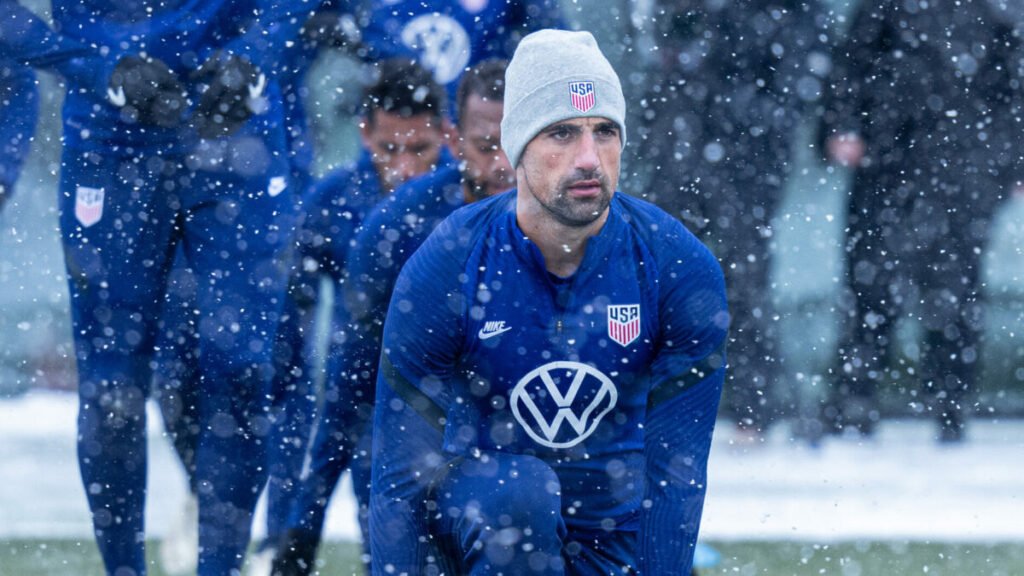
From a tactical perspective, these teams are also more comfortable playing at variable tempos. Instead of relying on constant intensity, they can selectively increase or decrease match speed based on environmental conditions. This adaptability becomes especially important in venues where afternoon heat peaks significantly impact playing conditions.
Match Phase Breakdown Under Heat Stress
Heat does not affect all stages of a match equally, and understanding this distribution is essential for analyzing performance trends. In the early phase of matches, most teams are still capable of executing their intended tactical systems. Pressing intensity is relatively normal, and high-energy actions are more frequent as teams attempt to establish control.
As the match progresses into the middle phase, physiological strain begins to accumulate. Players reduce sprint frequency, defensive lines stretch vertically, and pressing coordination becomes less synchronized. This is often where tactical systems start to degrade under heat stress.
In the final phase, fatigue becomes the dominant factor. Decision-making slows significantly, technical errors increase, and defensive concentration drops. Substitutions and hydration breaks become critical tools for managing performance decline. Matches played under extreme heat conditions often become less structured and more reactive in this phase, with outcomes influenced heavily by endurance and squad depth.
Tactical and Strategic Implications for the World Cup
The presence of extreme heat fundamentally changes how teams must approach tournament preparation. Traditional emphasis on tactical structure alone is no longer sufficient. Squad depth becomes a key determinant of success, as rotation is required to maintain physical output across multiple matches. Teams with deeper benches can rotate high-intensity players more effectively without sacrificing tactical stability. Heat Struggle Teams Analysis is important in terms of tactical and strategic implications.
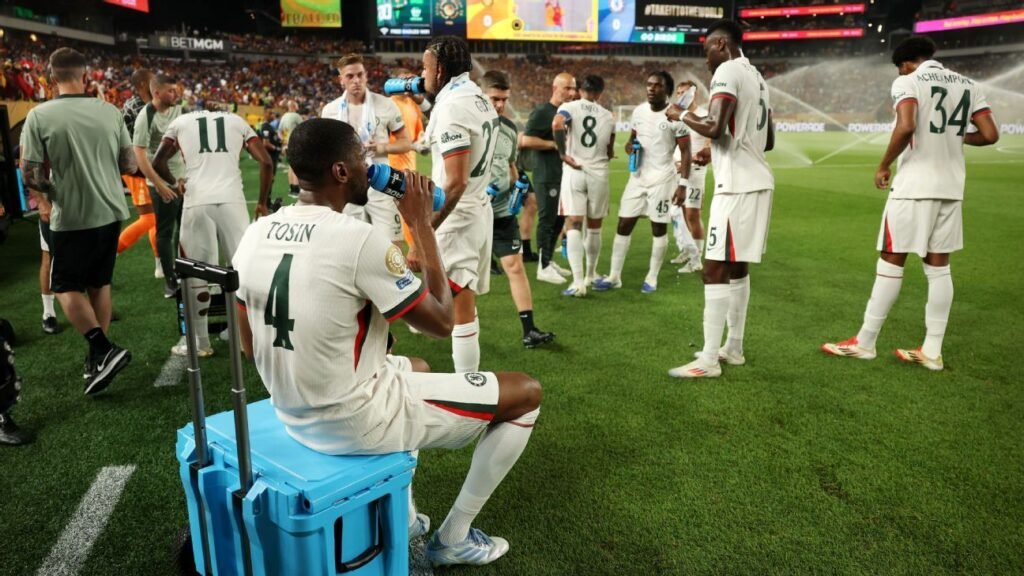
Training strategies also shift toward climate preparation. Heat acclimation programs, hydration protocols, and recovery systems become essential components of pre-tournament planning. Teams that fail to integrate these elements risk significant performance decline. In addition, substitution strategy gains increased importance. Coaches must manage player workload more precisely, often prioritizing physical preservation over tactical rigidity during matches.
Psychological and Cognitive Effects of Heat
Beyond physical impact, heat also affects cognitive performance. Research shows that elevated body temperature can impair attention, slow reaction time, and reduce decision-making accuracy.
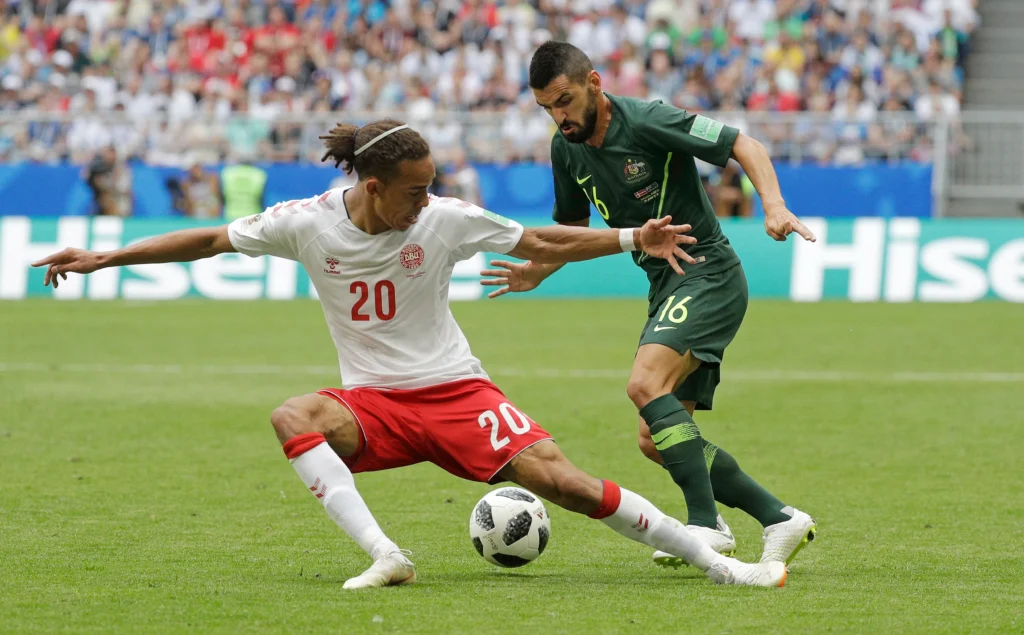
In football terms, this translates into slower passing decisions, reduced awareness of pressing traps, and increased defensive errors under pressure. These effects become more pronounced in high-stakes matches where mental fatigue combines with physical exhaustion. This cognitive decline can shift match outcomes in subtle but decisive ways, especially in knockout stages where single errors can determine progression.
Final Assessment: Heat as a Competitive Equalizer
The 2026 FIFA World Cup will not only test technical quality and tactical innovation but also environmental adaptation. Heat and humidity act as a hidden layer of competition, influencing physical performance, tactical execution, and psychological stability.
High-pressing teams and cold-climate squads face the greatest risk of performance decline under sustained thermal stress. In contrast, teams with flexible tactical structures and strong climate adaptation strategies are better positioned to maintain consistency. Ultimately, success in this tournament will depend on more than footballing ability alone. It will require precise management of energy, intelligent tactical flexibility, and preparation for one of the most physically demanding environments in World Cup history.