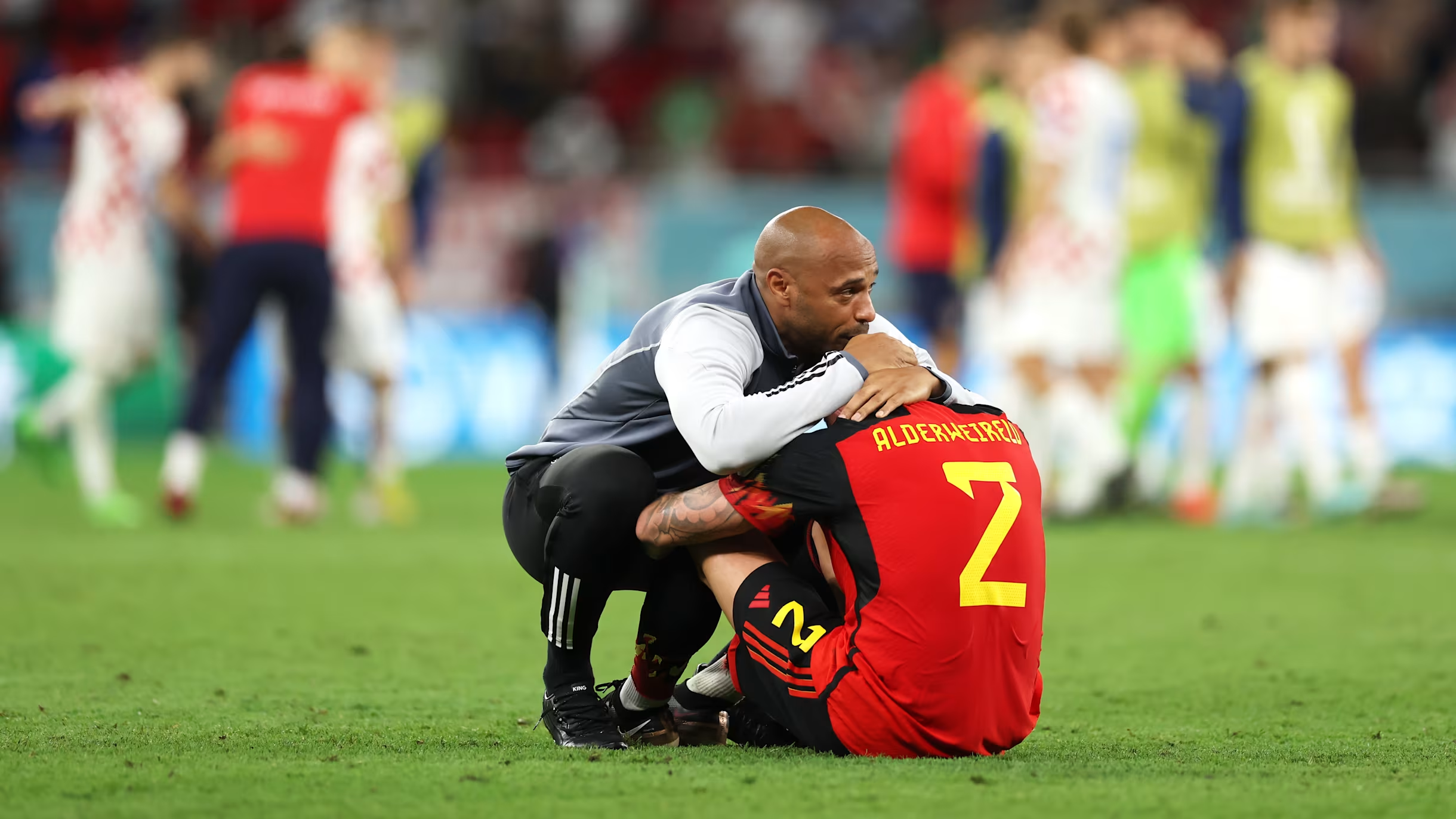
New Zealand vs Belgium at the 2026 FIFA World Cup sits in Group G, a section that heavily tilts toward European and African contenders. Belgium enters the match under expectation pressure: anything other than three points would be considered a setback in a group where Egypt and Iran are direct competitors for knockout qualification. This blog explores New Zealand vs Belgium World Cup odds and predictions.
New Zealand, meanwhile, approach the fixture from a different competitive reality. Their World Cup objective is not group dominance but survival competitiveness staying structurally organised, limiting goal difference damage, and targeting points in more balanced matchups later in the group stage. This contrast shapes the tactical identity of the match more than anything else. Belgium must attack. New Zealand must resist.
Deeper Odds Interpretation
Across early market modeling and simulation-based projections, Belgium consistently sit among the most reliable group-stage favourites in the tournament.
Typical market structure:
- Belgium win probability: very high (dominant favourite tier)
- Draw probability: low single-digit scenario
- New Zealand win probability: extreme upset range
More advanced projection systems suggest:
- Belgium top-two qualification probability: near certain
- New Zealand knockout qualification probability: conditional, dependent on Iran/Egypt results

The key betting interpretation is not whether Belgium win, but how controlled the win is:
- Narrow win (1–0, 2–0) = disciplined New Zealand defensive success
- Comfortable win (3+ goal margin) = Belgium attacking efficiency and early breakthrough
- High-scoring win = transitional breakdown in New Zealand shape
Tactical Identity Clash
Belgium: Structured Star-Driven Attacking Model
Belgium’s system blends elite individual quality with structured positional play. The team is no longer built on pure dominance but on controlled attacking sequences led by key creators.
Core structural features:
- 4-3-3 base shape transitioning into 3-2-5 in possession
- Fullbacks pushing high to stretch defensive lines
- Central midfield orchestration through Kevin De Bruyne
- Direct attacking acceleration through wide players
Attacking mechanism:
- Ball progression through midfield zones
- Vertical passes into half-spaces
- Isolation of wingers in 1v1 situations
- Striker positioning inside penalty area for high-value chances
Belgium’s biggest advantage is unpredictability. They can break a low block through:
- Long-range passing
- Wide dribbling
- Set-piece execution
- Second-phase rebounds
Defensively, however, Belgium can be exposed in:
- Wide transitions after fullback overlap
- Central spacing when midfield pushes high
- Recovery speed against counter-attacks
New Zealand: Survival Football with Targeted Threats
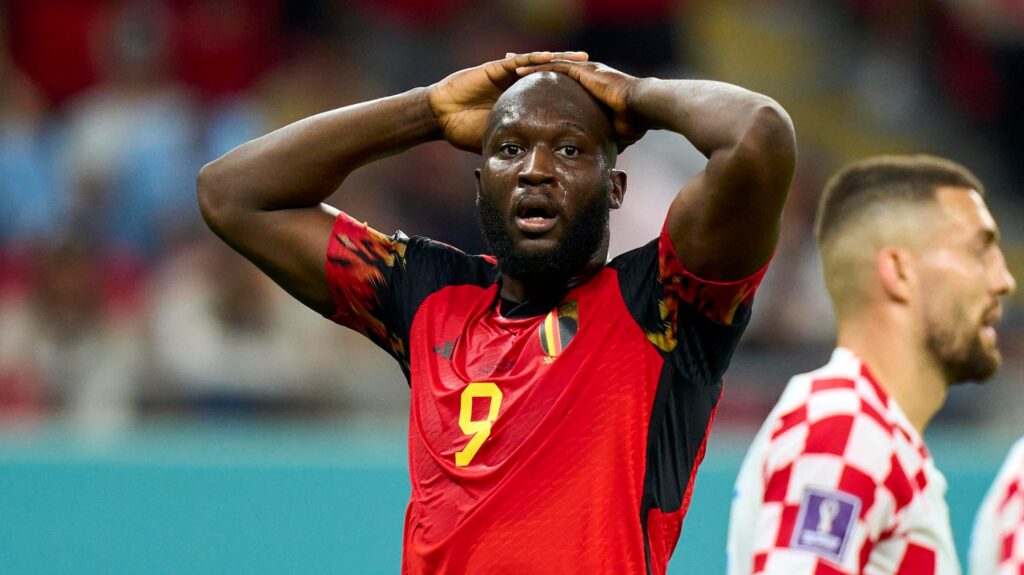
New Zealand’s system is one of the most structured low-block setups in the tournament.
Expected structure:
- 4-5-1 defensive shell against possession-heavy sides
- Narrow central compactness
- Deep defensive line to prevent space in behind
Defensive philosophy:
- Force play wide
- Protect central penalty zone
- Prioritise aerial duels over ground duels
- Clear danger zones rather than build from pressure
Attacking method:
- Direct long balls into Chris Wood
- Second-ball recovery in midfield zones
- Set-piece reliance (corners, free kicks)
- Occasional wide overloads through Liberato Cacace
New Zealand’s key challenge is not just defending but sustaining defensive concentration under prolonged pressure phases. Against elite teams, a single lapse often defines the match.
Key Tactical Battle Zones
1. Belgium Right Wing vs New Zealand Left Block
Jeremy Doku’s dribbling threat will be central. If he consistently beats the first defender, New Zealand’s defensive shape collapses inward.
2. Midfield Control: De Bruyne vs Stamenic

This is the control axis of the match:
- De Bruyne dictates tempo and final-third entry
- Stamenic attempts disruption and second-ball control
If Belgium win this battle, New Zealand will spend most of the match defending inside their own box.
3. Aerial Duels in Both Boxes
New Zealand’s only consistent attacking outlet is aerial delivery to Chris Wood. Belgium’s defensive response to this will define whether New Zealand generate any real goal threat.
Player Impact Analysis
Belgium
Kevin De Bruyne
The most influential player on the pitch. His ability to find passing lanes between compact defensive lines determines Belgium’s scoring rate. Even in reduced space, his vision creates high-quality chances.
Romelu Lukaku
Key focal point for finishing. His movement inside the box against deep defensive blocks becomes critical. If Belgium dominate wide areas, Lukaku benefits directly.
Jeremy Doku

Game-breaker in isolation situations. Against low blocks, individual dribbling is often more effective than structured passing—Doku provides that outlet.
New Zealand
Chris Wood
The central reference point of the entire team. His role includes:
- Holding up long balls
- Winning aerial duels
- Creating rare penalty box chances
- Converting set-piece opportunities
Without him, New Zealand’s attacking threat drops significantly.
Liberato Cacace
Primary progressive outlet. His ability to deliver early crosses into the box is New Zealand’s most consistent attacking mechanism.
Marko Stamenic
Structural stabiliser in midfield. Responsible for breaking rhythm and delaying Belgium’s forward progression.
Match Tempo Projection
Expected phases of play:
First 20 minutes:
- Belgium high possession (70%+)
- New Zealand compact and conservative
- Limited chances, probing phase
20–45 minutes:
- Belgium increase penetration attempts
- Wide overloads become frequent
- First high-quality chances likely created

Second half:
- Game opens if Belgium score early
- Counter-attacks emerge if New Zealand chase
- Possession remains Belgium-dominant regardless
Late stages:
- Game management phase
- Potential rotation or tempo control by Belgium
- New Zealand focus on damage limitation or set-piece opportunity
Statistical Projection Model
Expected statistical range:
- Possession: Belgium 65–75%
- Shots: Belgium 14–20 / New Zealand 2–6
- On-target shots: Belgium 5–9 / New Zealand 0–2
- Corners: Belgium 6–10
- Expected goals: Belgium 2.1–3.0 / New Zealand 0.2–0.7
Most likely outcome band:
- Belgium win by 2–3 goal margin
- Low probability of both teams scoring
- Moderate chance of clean sheet for Belgium
Betting Market Interpretation (Analytical Only)
Logical market directions:
- Belgium to win + under/over lines depending on tempo expectation
- Belgium clean sheet higher probability than BTTS
- Chris Wood anytime scorer remains high-risk value selection
- Handicap Belgium -1.5 or -2.0 in aggressive projections
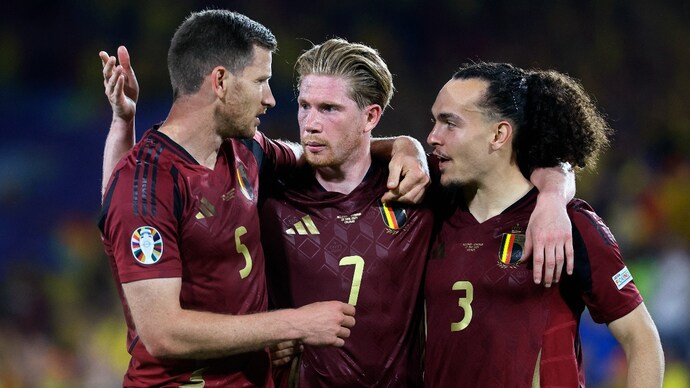
Risk factors:
- Early New Zealand defensive success compresses scoreline
- Tournament opening caution from Belgium
- Finishing variance in low-chance creation phases
Final Prediction and Scoreline Range
Belgium remain clear favourites due to squad depth, technical superiority, and attacking variety. New Zealand’s structure ensures competitiveness for long periods but struggles to consistently suppress elite chance creation.
Most realistic outcomes:
- Controlled Belgium win (2–0)
- Expanded Belgium win (3–0)
- Late secured Belgium win after resistance (2–1 or 3–1)
Predicted Score
Belgium 2–0 New Zealand
Closing Evaluation
This match is defined less by uncertainty and more by execution quality. Belgium is expected to control all major phases: possession, territory, chance creation, and game rhythm. New Zealand vs Belgium is one of the most exciting matches in the World Cup 2026.
New Zealand’s success is not measured in victory probability but in structural resistance how long they can delay collapse, how effectively they manage set-piece moments, and whether Chris Wood can create isolated scoring opportunities. In a World Cup Group G context that includes Egypt and Iran, this fixture functions as Belgium’s platform match: a controlled win designed to establish early authority in the group standings.