The FIFA World Cup 2026 will be unlike any previous edition. With 48 teams, expanded qualification pathways, and a redesigned group-stage format, the tournament is structurally built to increase unpredictability. While traditional giants such as France, Brazil, Argentina, Spain, and England still dominate pre-tournament predictions, the reality of modern international football suggests that dominance is no longer absolute. The blog explores some of the possible World Cup 2026 Upsets.
The gap between elite nations and emerging footballing powers has narrowed significantly. Tactical systems are more standardized globally, players from smaller nations compete in top European leagues, and defensive organization has reached levels that can neutralize even the most talented attacking units.
This combination creates the perfect environment for shock results. The World Cup 2026 upsets will not be rare accidents they will be tactical outcomes shaped by pressure, structure, and efficiency in decisive moments. Below are five World Cup 2026 Upsets scenarios that could redefine the tournament.
1. Morocco Stuns Brazil: Tactical Discipline Beats Individual Talent
Brazil remains one of the most feared teams in world football, built around elite attacking stars such as Vinícius Júnior, Rodrygo, and emerging young talents. On paper, they possess the highest technical ceiling in international football. However, recent tournaments have repeatedly shown that talent alone does not guarantee control in knockout-style competitions.
Morocco enters 2026 as one of the most tactically disciplined teams in the world. Their 2022 World Cup semifinal run was not a surprise to analysts who tracked their defensive structure, compact midfield shape, and elite transition efficiency. Under Walid Regragui’s influence, Morocco developed a system that is extremely difficult to break down, even for top-tier attacking teams.
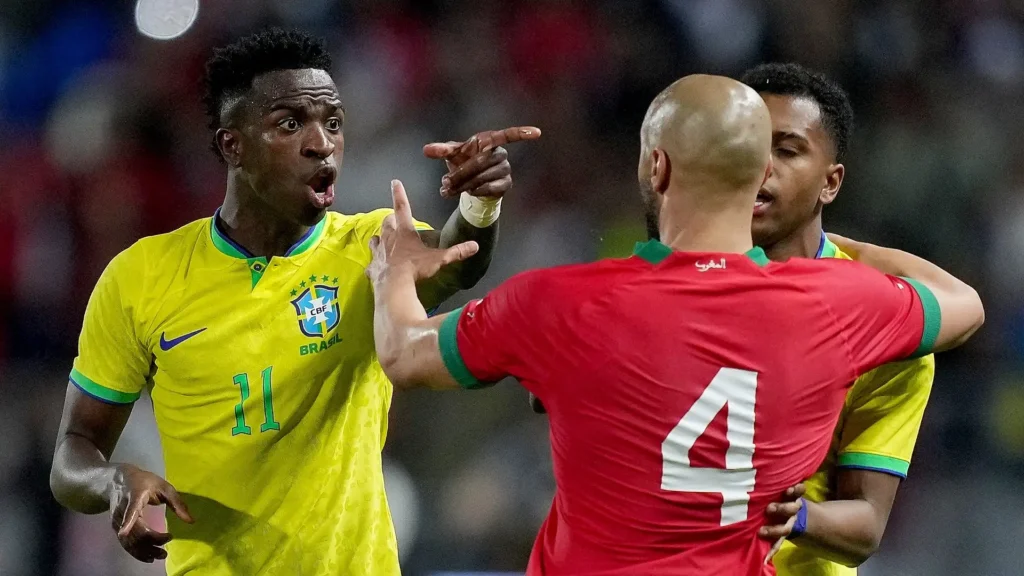
Brazil’s potential weakness lies in its defensive transitions. When full-backs push high and midfield spacing becomes stretched, they become vulnerable to quick counterattacks. Morocco thrives exactly in these conditions. Players like Achraf Hakimi provide width and pace in transition, while Yassine Bounou offers world-class goalkeeping consistency in high-pressure moments. Against a possession-heavy Brazil side, Morocco’s low block and fast breakouts could completely shift momentum.
Key upset dynamic: Morocco’s defensive compactness vs Brazil’s attacking imbalance.
Predicted pattern: Brazil dominates possession, Morocco scores on transition or set piece.
2. Austria Breaks Argentina: Pressing Intensity Disrupts Champions
Argentina enters the 2026 World Cup as reigning champions, carrying immense confidence and continuity from their 2022 triumph. Lionel Messi’s leadership, combined with a strong midfield core, still makes them a top contender. However, time is a critical factor. Many of Argentina’s core players are now four years older, and while experience is valuable, international tournaments often punish slight declines in intensity or mobility. Against highly structured pressing teams, even small gaps become decisive.
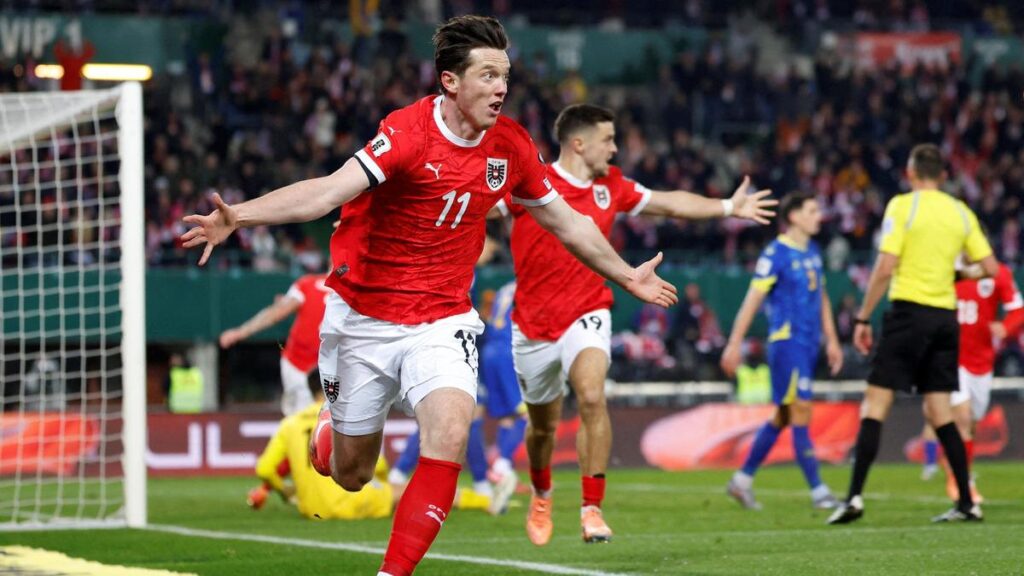
Austria represents one of the most dangerous stylistic matchups for Argentina. Built on principles similar to Ralf Rangnick’s high-press system, Austria plays aggressive, vertical, and physically demanding football. Their structure focuses on winning the ball high up the pitch and immediately attacking space before defenses can reset. Against a team like Argentina, which prefers controlled buildup and rhythm-based possession, this creates constant disruption. If Austria forces turnovers in midfield zones, Argentina’s defensive shape could be exposed in transition moments. This is where upsets are born: not from dominance, but from chaos.
Key upset dynamic: Austria’s high-intensity pressing vs Argentina’s aging midfield structure.
Predicted pattern: Austria scores early, forces Argentina into reactive football.
3. Japan Eliminates the Netherlands: Precision Against Possession
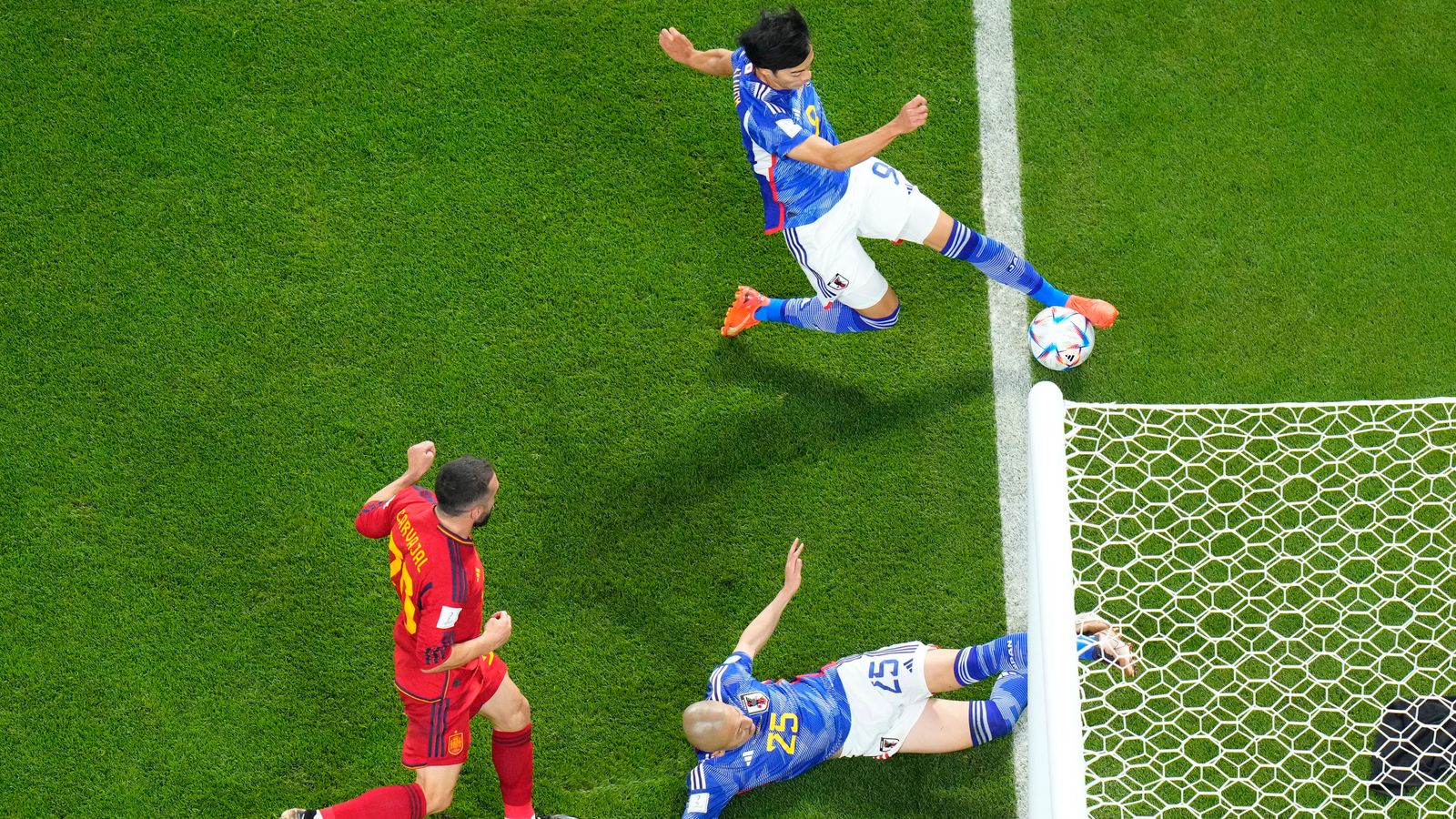
The Netherlands enters every World Cup with expectations of deep progression, but history has shown that consistency at the highest level remains a challenge. While their squad is technically strong, they often struggle with efficiency in the final third. Japan, on the other hand, has become one of the most tactically refined teams in international football. Their development over the past decade has focused on structure, discipline, and rapid transitional play. They are no longer considered an underdog in the traditional sense. Japan’s system is built on synchronized pressing, compact defensive lines, and extremely fast attacking transitions. They excel against teams that dominate possession but lack direct penetration.
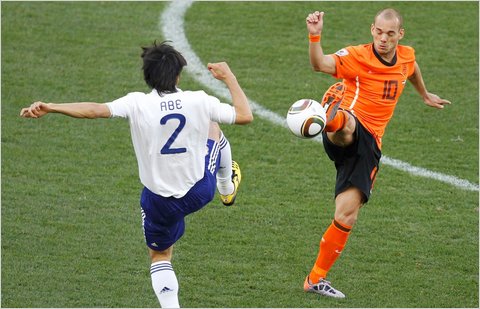
This creates a problem for the Netherlands. Even if they control the ball, breaking Japan’s defensive shape requires precision that can be difficult to maintain under pressure. Japan does not need many chances to be dangerous; they rely on efficiency, timing, and collective movement. Key players such as Kaoru Mitoma and Takefusa Kubo add unpredictability in transition phases, making Japan capable of scoring even in low-possession matches.
Key upset dynamic: Japan’s efficiency vs Dutch attacking inconsistency.
Predicted pattern: Netherlands dominate possession but fail to convert; Japan punishes mistakes.
4. Ecuador Shocks Germany: Defensive Structure Wins the Battle
Germany is undergoing a long-term rebuild centered around Florian Wirtz, Jamal Musiala, and a new generation of technically gifted midfielders. While their attacking potential is high, consistency remains an issue in tournament environments where compact defensive systems dominate.
Ecuador is one of the most tactically disciplined teams in South America. Their defensive structure is built on compact spacing, aggressive duels, and disciplined zonal coverage. They are extremely difficult to break down, even for elite attacking teams. Their defensive line, featuring players such as Piero Hincapié and Willian Pacho, provides both physical strength and positional intelligence. Ecuador also excels in set-piece situations, where many World Cup matches are decided.
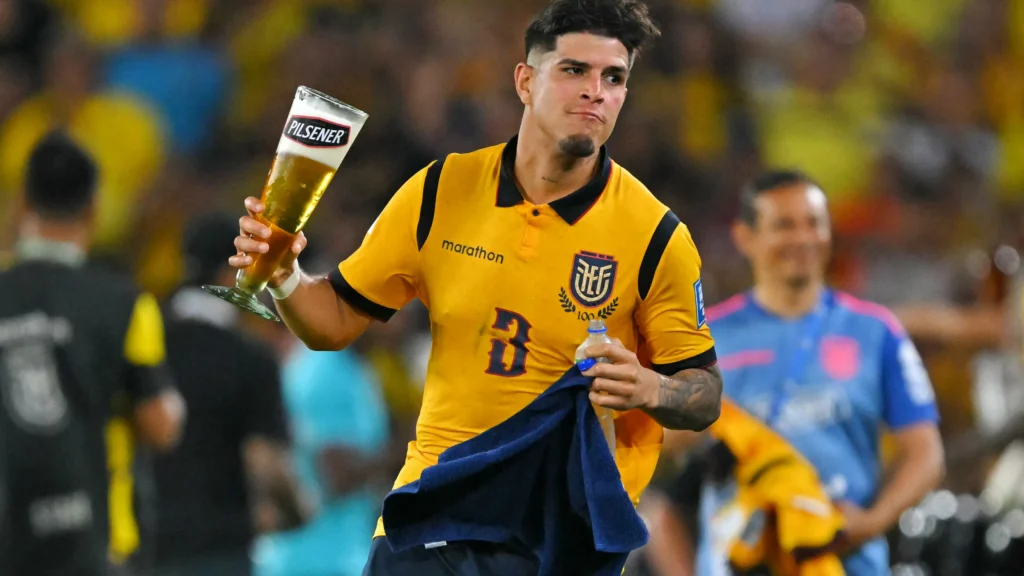
Germany’s challenge lies in breaking low blocks. Against teams that defend deep and narrow, their reliance on creative midfield play can sometimes slow down attacking transitions. If space is limited, frustration builds quickly, and mistakes increase. Ecuador’s strategy would be simple but effective: absorb pressure, deny central spaces, and strike through counters or dead-ball situations.
Key upset dynamic: Ecuador’s defensive structure vs Germany’s positional attack.
Predicted pattern: Germany dominates territory but struggles to convert chances.
5. Norway Defeats France: Haaland Changes the Equation
France remains the most complete squad in international football. Their depth across every position, combined with elite attacking talent, makes them a favorite in any tournament. However, even the strongest teams are vulnerable in group-stage football where margins are thin.
Norway represents one of the most dangerous dark horses in the 2026 World Cup. Unlike many underdog teams, Norway possesses a genuine world-class attacking core. Erling Haaland is arguably the most efficient striker in world football, capable of converting minimal chances into goals at an extraordinary rate. Behind him, Martin Ødegaard provides elite playmaking ability, controlling tempo and creating high-quality chances through precise passing and spatial awareness.

France’s strength lies in depth and structure, but their group-stage matches sometimes involve rotation and experimentation. Against a clinical finisher like Haaland, even small defensive lapses can be punished. Norway does not need dominance to win. They need efficiency. One or two high-quality chances may be enough if Haaland is involved.
Key upset dynamic: Norway’s clinical finishing vs France’s possession control.
Predicted pattern: France dominates the game; Norway converts limited chances.
Why World Cup 2026 Upsets Will Increase
Several structural changes make surprises more likely:
- Expanded 48-team format reduces pressure on mid-tier nations
- Third-place qualification increases conservative play from favorites
- Increased tactical equality across federations
- More players competing in top European leagues from smaller nations
- Group-stage variance amplified by shorter tournament windows
These factors reduce predictability and increase the probability of early exits for even the strongest teams.
Final Outlook: A Tournament Built for Disruption
The 2026 FIFA World Cup will not be decided by reputation alone. It will be shaped by tactical execution, game management, and efficiency under pressure. Traditional giants remain favorites, but they are no longer immune. Teams like Morocco, Austria, Japan, Ecuador, and Norway represent a new competitive layer capable of challenging the global hierarchy. In modern football, upsets are no longer surprises they are structural outcomes of a game that has become more balanced than ever. The World Cup 2026 upsets will define the tournament narrative just as much as the champions themselves.