
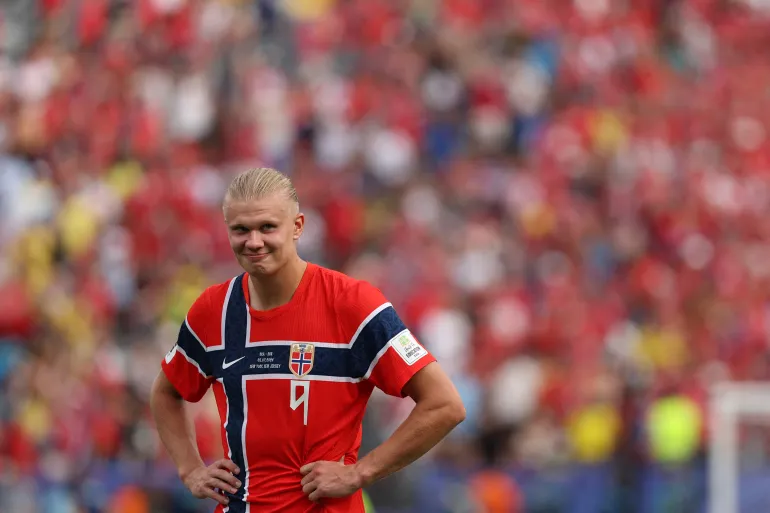
Speed has become one of the defining qualities in modern football. While technical ability, tactical intelligence, and finishing remain essential, the ability to accelerate past defenders or recover quickly in defensive situations can often decide the outcome of a match. Advancements in GPS tracking, optical tracking systems, and performance analytics have also transformed how player speed is measured. Instead of relying on estimates, clubs and competitions now record every sprint during competitive matches, giving supporters a much clearer picture of who the fastest footballers really are.
The 2025/26 season produced some remarkable sprint records across Europe’s top competitions. From the Premier League to the UEFA Champions League and the FIFA World Cup, several players consistently demonstrated elite pace, while others set new personal or competition records. In this article, we rank the fastest footballers in the world using officially recorded top speeds from recognised competitions and tracking systems. Where available, the figures come from league tracking data, FIFA, or performance providers used in professional football.
How Is Speed Measured in Football?
Unlike athletics, football speed is measured during real matches rather than controlled sprint events.
Professional clubs and competitions use technologies such as GPS performance trackers, optical tracking cameras and advanced data providers including Catapult, STATSports and Gradient. These systems measure a player’s movement throughout a match and record several physical metrics, including:
- Maximum sprint speed
- Distance covered
- Number of sprints
- High-intensity running
- Acceleration and deceleration
- Recovery runs
Because these speeds are recorded during competitive matches, they reflect a player’s ability to reach maximum pace while dribbling, defending, pressing or making attacking runs under pressure. This makes football sprint data far more meaningful than a straight-line 100-metre sprint, as players rarely run without changing direction or reacting to opponents.
Top 10 Fastest Footballers in the World (2026)
10. Dara O’Shea – 36.73 km/h
Although central defenders are not usually associated with blistering pace, Dara O’Shea has proven that modern defenders need more than just strength and positioning. The Burnley defender recorded an impressive top speed of 36.73 km/h, placing him among the quickest footballers in world football.
His recovery speed allows him to defend higher up the pitch, while his athleticism makes him difficult to beat in one-on-one situations. O’Shea’s pace is particularly valuable during defensive transitions, where recovering quickly can prevent dangerous counter-attacks. For a centre-back to reach this level of speed is exceptional and highlights how athletic today’s defenders have become. Therefore, he is one of the fastest footballers in modern era.
9. Dominik Szoboszlai – 36.76 km/h
Liverpool midfielder Dominik Szoboszlai combines technical quality with outstanding athleticism. Although primarily recognised for his creativity, passing range and shooting ability, the Hungarian international is also one of football’s quickest midfielders. During the 2025/26 season, he reached a recorded top speed of 36.76 km/h. Therefore, he is one of the fastest footballers in modern era.
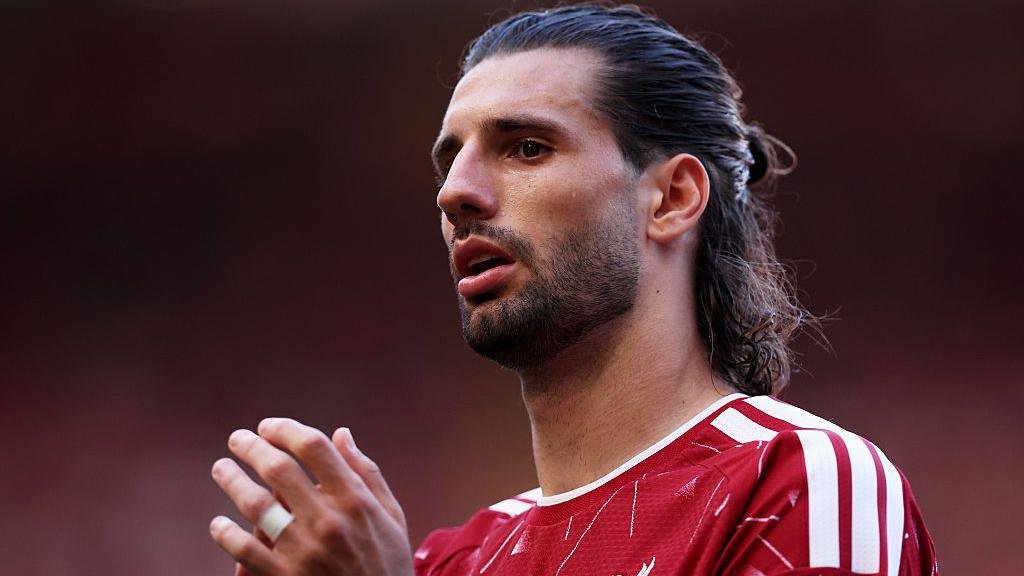
Unlike many players on this list, Szoboszlai regularly reaches high speeds while carrying possession, making him particularly dangerous during transitions. His ability to cover large distances also makes him an effective pressing midfielder, capable of contributing in both attack and defence throughout ninety minutes.
8. Sirlord Conteh – 36.82 km/h
FC Heidenheim winger Sirlord Conteh has quietly established himself as one of Europe’s fastest players. His recorded top speed of 36.82 km/h places him among football’s elite sprinters. Conteh relies heavily on explosive acceleration and direct running. Defenders often struggle once he reaches full speed, particularly in open spaces where he can attack behind defensive lines. Although he may not enjoy the same global recognition as some of the game’s biggest stars, his sprint numbers are among the best recorded during the 2025/26 campaign.
7. Pedro Neto – 36.86 km/h
Chelsea winger Pedro Neto has built his reputation around explosive pace and direct attacking play. With a recorded speed of 36.86 km/h, the Portugal international remains one of the Premier League’s quickest attackers. Neto’s acceleration is often just as dangerous as his maximum speed. He regularly beats defenders over short distances before delivering crosses or driving into dangerous positions. His ability to maintain speed while dribbling also separates him from many naturally quick players, making him a constant threat in one-versus-one situations.
6. Karim Adeyemi – 37.60 km/h
Borussia Dortmund forward Karim Adeyemi has established himself as one of the quickest attackers in world football. Blessed with explosive acceleration and excellent close control, the German international is a constant threat whenever he has space to attack.
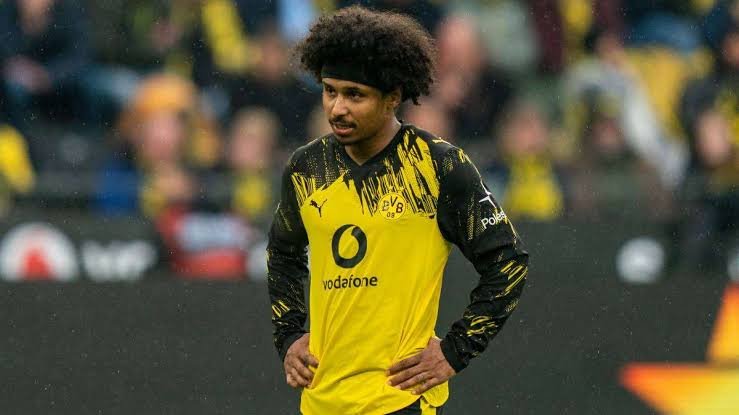
During the 2025/26 season, Adeyemi recorded an impressive top speed of 37.60 km/h, making him one of the fastest players currently playing in Europe. His pace is far more than just a headline statistic. Adeyemi uses his speed to stretch defensive lines, make penetrating runs behind defenders and create space for teammates. His ability to reach full speed within a few strides makes him particularly dangerous during counter-attacks. At just 24 years old, he remains one of football’s most exciting attacking talents and is likely to feature among the world’s fastest players for years to come.
5. Kylian Mbappé – 38.00 km/h
When discussions turn to football’s fastest players, Kylian Mbappé is almost always one of the first names mentioned. The Real Madrid superstar has consistently demonstrated elite pace throughout his career, regularly leaving defenders trailing behind during domestic and international competitions. During the 2026 FIFA World Cup, Mbappé reached a recorded top speed of 37.6 km/h, while other official tracking systems have recorded him at 38.0 km/h. Therefore, he is one of the fastest footballers in modern era.
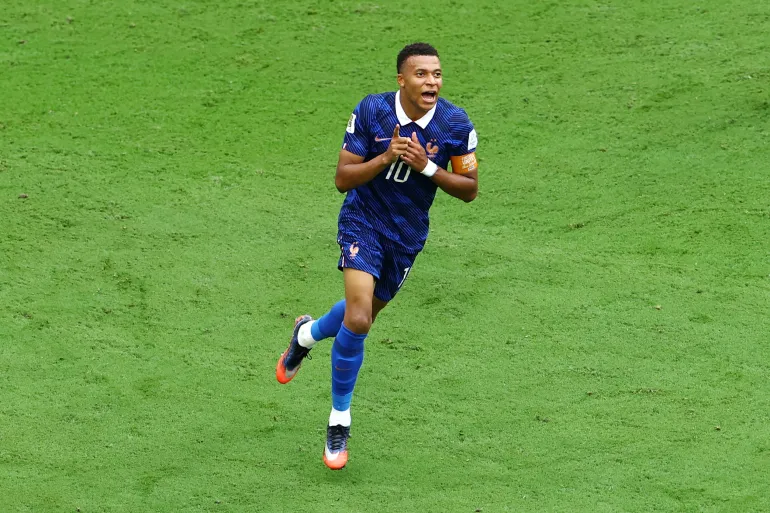
What makes Mbappé exceptional is not simply his top speed but how quickly he reaches it. His acceleration over the first few metres is arguably unmatched, allowing him to exploit even the smallest defensive gaps. Combined with outstanding finishing, intelligent movement and composure in front of goal, his speed has become one of the most devastating weapons in modern football.
4. Micky van de Ven – 37.38 km/h
Tottenham Hotspur defender Micky van de Ven has redefined expectations for central defenders. Standing well over six feet tall, the Dutch international combines physical strength with remarkable athleticism. His official top speed of 37.38 km/h remains one of the fastest ever recorded in Premier League history.

Unlike many rapid players who operate in attacking positions, Van de Ven regularly reaches these speeds while recovering defensively. His ability to chase down forwards in open space has become one of his biggest strengths. Few defenders can match his combination of positioning, recovery pace and composure, making him one of Europe’s standout centre-backs.
3. Kyle Walker – 37.31 km/h
Kyle Walker has spent more than a decade proving that pace remains one of his greatest assets. Even in the later stages of his career, the experienced England international continues to rank among football’s quickest players. His officially recorded top speed of 37.31 km/h demonstrates why he has remained one of the world’s best attacking full-backs.
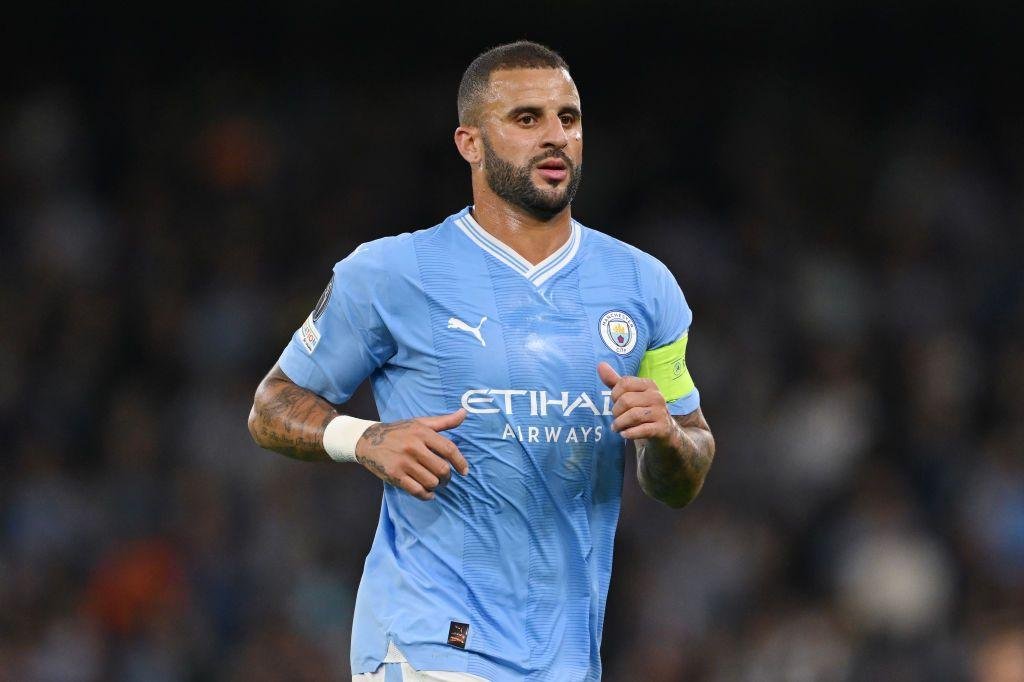
Walker’s recovery speed has often rescued both Manchester City and England in high-pressure situations, allowing his teams to play with an aggressive defensive line. His consistency over multiple seasons also sets him apart. While many players lose pace with age, Walker has continued to produce elite sprint numbers throughout his career.
2. Gabriel Silva – 40.30 km/h
Santa Clara winger Gabriel Silva currently holds one of the fastest officially recorded sprint speeds in professional football. The Brazilian reached an astonishing 40.30 km/h, becoming one of the very few footballers to break the 40 km/h barrier during competitive action.
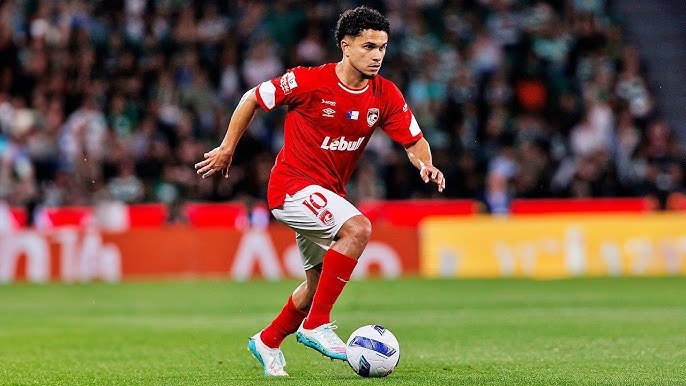
His incredible acceleration makes him extremely dangerous in one-on-one situations and during quick transitions. Once he reaches full speed, defenders have very little chance of catching him. Although he may not yet enjoy the worldwide recognition of Europe’s biggest stars, his sprint record has attracted significant attention across the football community.
1. Nany Dimata – 39.60 km/h
Belgian forward Nany Dimata currently tops our ranking as the fastest footballer in the world based on officially reported competition data. During the 2025/26 UEFA Champions League campaign, Dimata recorded a remarkable top speed of 39.60 km/h, setting one of the highest sprint speeds ever documented in elite football. Playing for Pafos FC, Dimata combines explosive acceleration with direct attacking movement, making him a constant threat when running beyond defensive lines.
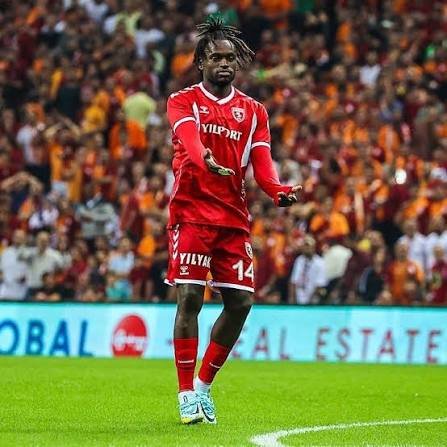
Breaking close to the 40 km/h mark is an extraordinary achievement in football, especially considering these speeds are recorded during competitive matches rather than controlled sprint tests. While football speed records continue to evolve as tracking technology improves, Dimata’s achievement currently stands among the most impressive ever recorded. Therefore, he is one of the fastest footballers in modern era.
Honourable Mentions
Several other players narrowly missed out on the top 10 but deserve recognition for their impressive sprint speeds during the 2025/26 season.
Jackson Tchatchoua (Wolverhampton Wanderers) recorded 37.30 km/h, making him the fastest player in the Premier League during the 2025/26 campaign. His sprint against Everton was also one of the fastest ever officially recorded in the competition.
Bryan Mbeumo (Manchester United) reached 36.36 km/h during the Premier League season, while Anthony Gordon continued to showcase his explosive pace. The Newcastle United winger also topped the UEFA Champions League speed charts among wide players with a remarkable 37.9 km/h.
Other notable names include Erling Haaland, Pedro Neto, Achraf Hakimi, Vinícius Júnior, Mohamed Salah, Rafael Leão, Jordan Bos, and Abdukodir Khusanov, all of whom have consistently ranked among football’s quickest players across domestic and international competitions.
As tracking technology continues to improve, new records are likely to be set, making the race to become football’s fastest player more competitive than ever.
What Makes These Players So Fast?
Raw pace is only one part of the equation. Elite footballers combine several physical attributes that allow them to reach extraordinary speeds during matches.
Some of the key factors include:
- Explosive acceleration over the first few metres.
- Powerful lower-body strength for rapid sprinting.
- Excellent running mechanics and stride efficiency.
- High levels of fitness to repeat sprints throughout a match.
- Tactical awareness to time runs effectively.
- The ability to maintain control of the ball while sprinting.
Players like Mbappé and Vinícius Jr. are dangerous not simply because they run fast, but because they can do so while dribbling, changing direction, and making decisive attacking movements.
Why Speed Matters in Modern Football
Modern football has become faster than ever before. Teams press aggressively, attack quickly in transition and defend with high defensive lines. As a result, pace has become one of the most valuable physical attributes across every position. Fast defenders recover quickly during counter-attacks. Quick full-backs provide width while still getting back to defend.
Rapid midfielders can carry the ball through central areas. Fast forwards stretch defensive lines and create space for teammates. Although speed alone does not guarantee success, combining pace with technical ability and intelligent decision-making often separates elite players from the rest.
Frequently Asked Questions
Who is the fastest footballer in the world in 2026?
Based on officially reported competition data, Gabriel Silva has recorded the highest sprint speed at 40.3 km/h, while Nany Dimata has also reached an exceptional 39.6 km/h in elite competition.
Who is the fastest player in Premier League history?
Micky van de Ven holds the highest officially recorded Premier League sprint at 37.38 km/h, although Jackson Tchatchoua recorded 37.30 km/h during the 2025/26 season.
Who is the fastest player in the UEFA Champions League?
Among players still competing in the 2025/26 UEFA Champions League, Anthony Gordon recorded the highest speed among wingers at 37.9 km/h, while Abdukodir Khusanov topped the centre-back rankings.
How is football speed measured?
Professional football uses GPS trackers, optical tracking cameras and performance monitoring systems to measure sprint speed, acceleration, total distance covered and other physical metrics during competitive matches.
Is acceleration more important than top speed?
In many situations, yes. Players who accelerate quickly over the first five to ten metres often gain a greater advantage than those who simply record the highest top speed.
Conclusion
Football continues to evolve, and speed has become one of the game’s most influential physical attributes. Whether it’s a winger racing past defenders, a striker making a perfectly timed run behind the back line, or a centre-back producing a crucial recovery sprint, pace can completely change the outcome of a match.
The 2025/26 season highlighted just how extraordinary modern footballers have become. Players such as Gabriel Silva, Nany Dimata, Kylian Mbappé, Micky van de Ven, and Karim Adeyemi have all demonstrated world-class athleticism, while stars like Jackson Tchatchoua, Anthony Gordon, and Bryan Mbeumo continue to push the limits in domestic and European competitions.
As tracking technology becomes even more advanced, new sprint records will almost certainly emerge. However, one thing remains unchanged: in modern football, combining elite speed with technical quality, tactical intelligence and composure is what truly separates the very best players from the rest.

2 thoughts on “Fastest Footballers: Top 10 Fastest in the World (2026)”
Comments are closed.